
Flooring Service
Concrete Surface Preparation Services in Texas
The make-or-break step — prep done right so your floor actually lasts.
On the Gulf Coast, surface prep is everything. South Coast Epoxy handles full concrete surface preparation across Texas, including profiling, repairs and moisture management, so coatings bond and survive our humidity and slab-on-grade construction. Andrew's reputation is built on doing this step properly, even when it is the part nobody sees.
How it works
Surface prep combines mechanical profiling (diamond grinding or shot-blasting to a target CSP), repair of cracks, joints and spalls, decontamination, and, critically here, moisture assessment. Gulf-Coast slabs often push moisture vapor; where readings are high we use moisture-tolerant primers or mitigation systems so the topcoat does not blister or delaminate.
Benefits
- Creates the correct profile for a durable coating bond
- Addresses moisture vapor before it becomes a failure
- Repairs cracks, joints and spalls for a sound substrate
- Removes oils, coatings and contaminants
- Reduces the risk of bubbling, peeling and delamination
- Sets up every coating system for maximum lifespan
Best Used For
- Slabs prepping for epoxy, polyaspartic or polishing
- Older or contaminated commercial floors
- High-moisture slab-on-grade floors
- Warehouses and industrial floors before heavy systems
- Garages and patios before decorative coatings
- Failed-coating remediation
Get a free surface preparation quote
Every failed garage floor, peeling warehouse coating, and bubbling restaurant slab in the Houston Bay Area has one thing in common: the prep was skipped or rushed. Concrete surface preparation is the make-or-break step that decides whether a coating bonds for a decade or starts lifting in a season. At South Coast Epoxy, owner Andrew built his reputation on getting this invisible part right — proper diamond grinding, honest moisture testing, and real crack repair across League City, Houston, and the entire Gulf Coast.
What Concrete Surface Preparation Actually Is
Concrete surface preparation is the mechanical and chemical process of turning a raw, sealed, or contaminated slab into a clean, sound, properly profiled surface that a coating can grip. Bare concrete looks flat to the eye, but at a microscopic level a troweled or sealed slab is far too smooth and too contaminated for epoxy, polyaspartic, or polished systems to bond to. Prep changes that.
Done right, floor surface prep in Houston combines four things: profiling (opening the surface to a measurable roughness), repair (cracks, joints, spalls, and pitting), decontamination (oils, dust, old coatings, and curing compounds), and — critically here on the Gulf Coast — moisture assessment. Skip any one of those and even the best coating in the world will eventually delaminate.
The goal is a surface profile that gives the coating something to mechanically lock into. Industry standard for most coating thicknesses is an ICRI Concrete Surface Profile, or CSP, in the range of 2 to 3 for thin-mil epoxy and polyaspartic, and CSP 4 to 5 for heavier-build industrial systems. A correctly profiled slab lets a coating achieve pull-off adhesion strengths well above 300 psi — the difference between a floor that shrugs off forklifts and one that flakes off underfoot.
Why Prep Is the Most Important Step (In Plain Terms)
A coating is only as good as what it's stuck to. You can buy premium resin, hire a careful installer, and pick the perfect color — and still watch the floor fail within months if the slab underneath wasn't profiled, repaired, and moisture-checked.
Proper surface preparation delivers a chain of benefits that all trace back to that bond. It creates the correct mechanical profile so the coating actually grips. It addresses moisture vapor before it becomes blistering. It repairs cracks, control joints, and spalls so the substrate is sound rather than hollow. It strips oils, silicones, and old sealers that would otherwise act like a release agent. And it dramatically reduces the risk of bubbling, peeling, and delamination — the three failures that account for nearly every coating callback. In short, prep is what sets every system on top of it up for maximum lifespan.
Texas and Gulf-Coast Considerations You Can't Ignore
This is where most out-of-town advice falls apart. Surface prep on the Gulf Coast is not the same job it is in Denver or Phoenix, and pretending otherwise is how floors fail down here.
Slab-on-Grade Moisture Vapor
Almost every slab in League City, Clear Lake, Friendswood, and greater Houston is poured slab-on-grade — concrete sitting directly on damp Gulf-Coast soil with a high water table. Concrete is porous, so moisture vapor moves continuously upward through the slab. Trap that vapor under a non-breathable epoxy and the pressure underneath lifts the coating into blisters and delamination. This is the single most common reason DIY and lowest-bidder floors fail in our area, and it's why we test rather than guess. Where readings come back high, we use moisture-tolerant primers or a dedicated moisture-mitigation system before any topcoat goes down.
Heat, Humidity, and Cure Windows
Our summer heat and humidity shorten working times and change how primers and coatings cure. A slab that's been baking can flash a topcoat too fast; high humidity can cause amine blush or adhesion problems on the surface. Reading the slab and the conditions on the day — not just the calendar — is part of doing prep properly here.
Slab Movement and Cracking
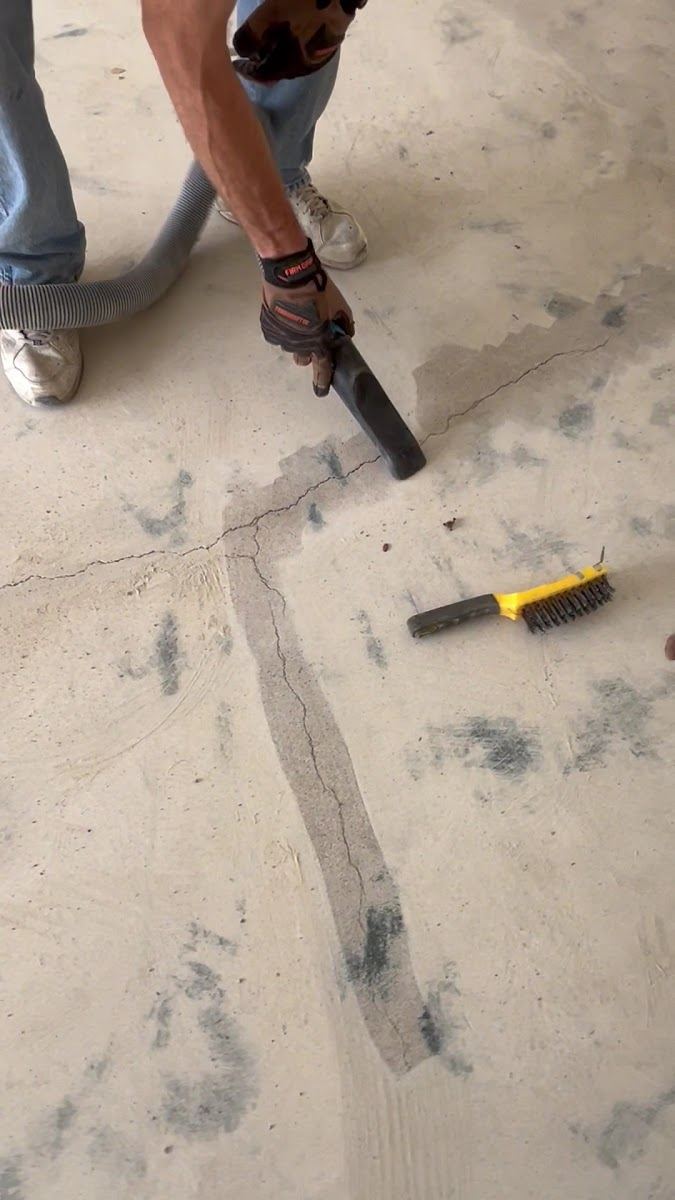
Expansive clay soils and dramatic moisture swings make Gulf-Coast slabs move. Control joints and hairline cracks that get coated over without treatment will telegraph straight back through the finished floor. We honor joints, repair cracks with the right flexible or rigid fillers for the situation, and rebuild spalled areas so the substrate is genuinely sound.
The Profiling Methods and When We Use Each
There's no single "best" method — only the right method for your slab, your coating, and your space. Honest concrete grinding and prep means matching the tool to the floor.
| Method | Best For | What It Does |
|---|---|---|
| Diamond grinding | Garages, smaller commercial, decorative work | Diamond-segment heads remove the smooth top layer and open a precise, controllable CSP |
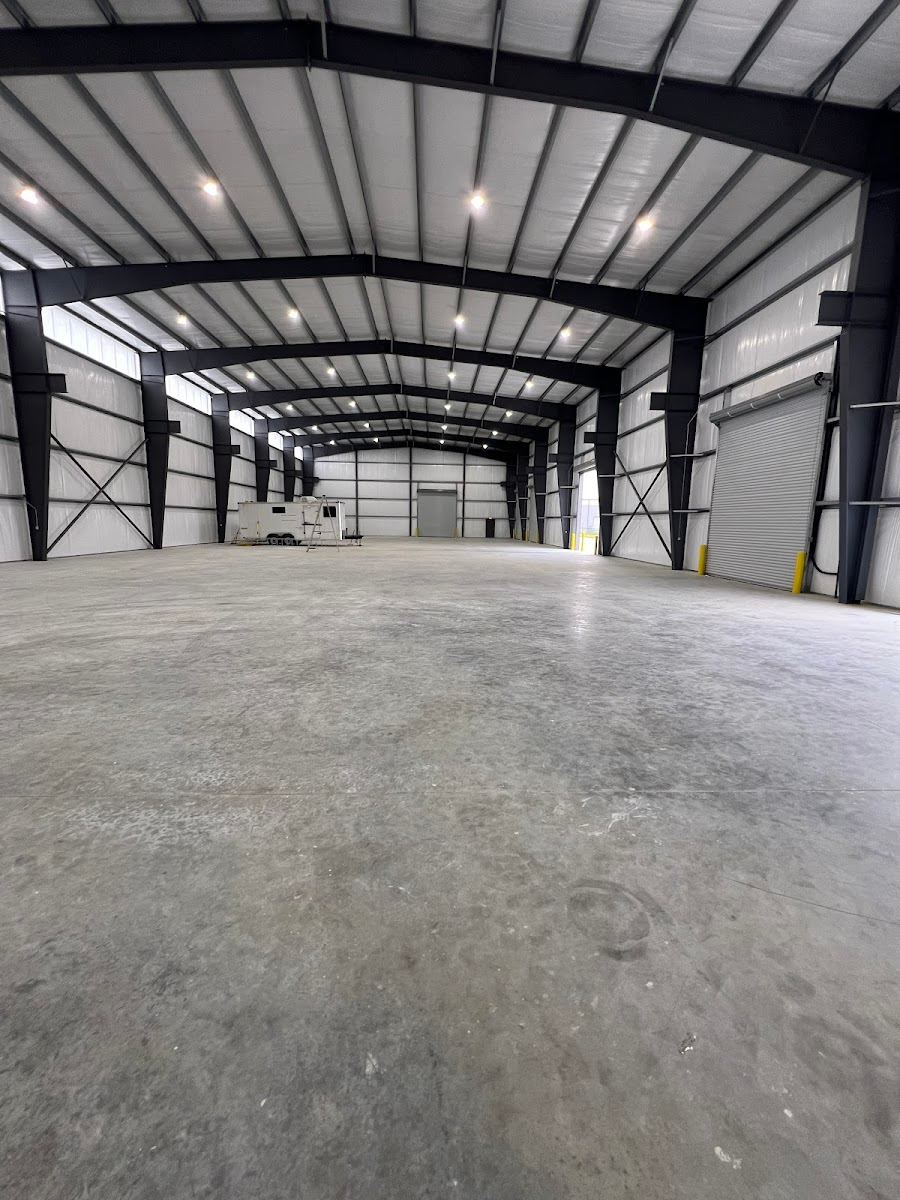
| Shot blasting | Large open slabs, warehouses, industrial | Steel shot blasts a uniform, aggressive profile across big areas fast |
| Hybrid (blast + grind) | Mixed spaces with edges and corners | Shot blast the open field, then diamond grind edges and tight areas for uniform adhesion |
| Surface repair | Any slab with cracks/spalls | Fills and rebuilds the substrate so it's sound before coating |
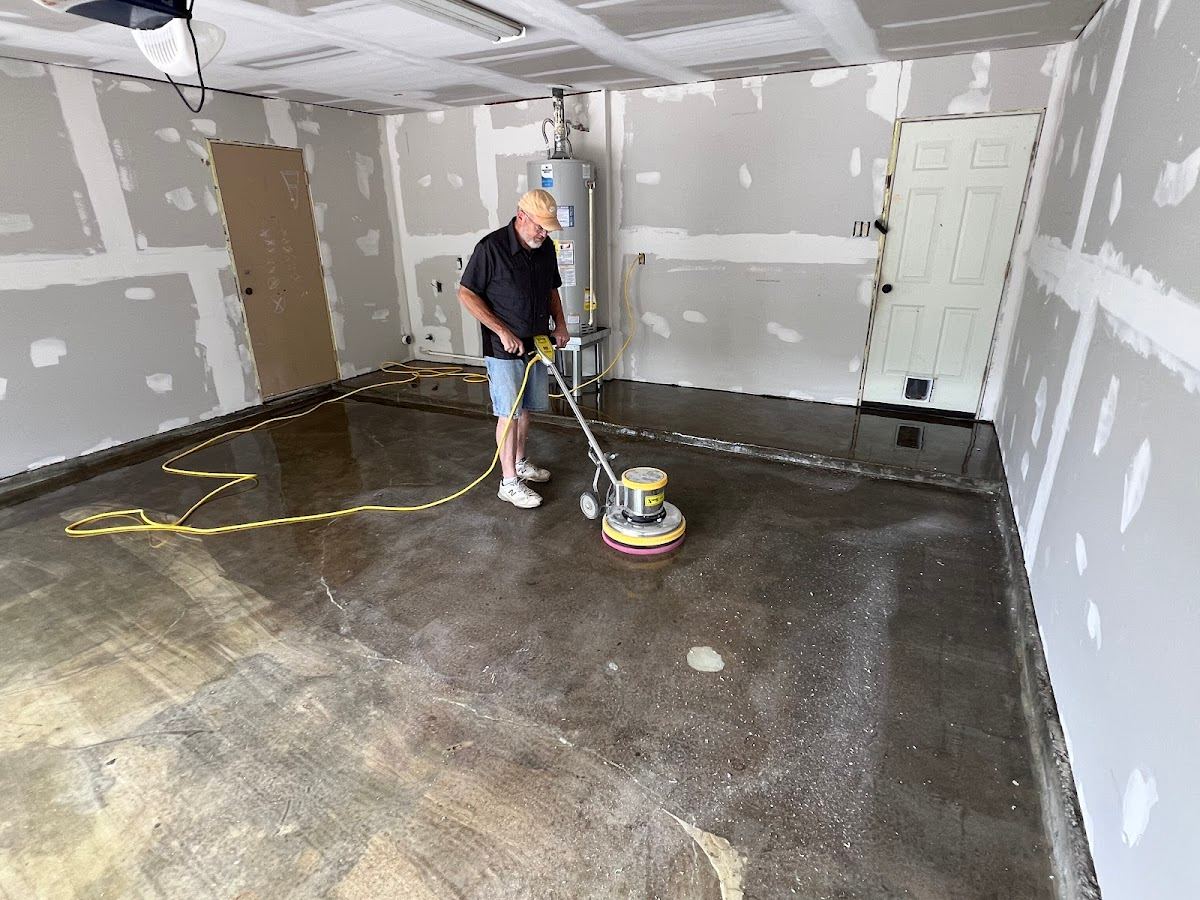
Diamond grinding is our go-to for residential garages and most commercial interiors — it's controllable, low-dust with proper vacuum extraction, and ideal where a decorative or polished concrete finish is the goal. Shot blasting earns its place on big open warehouse and industrial floors where speed and a consistent aggressive profile across thousands of square feet matter most. For many real-world jobs we combine them. What we don't lean on is acid etching — it's inconsistent, can't hit a reliable CSP, and leaves residue that undermines the very bond you're paying for.
Who and What Surface Prep Is Best For
Proper prep is foundational to essentially every floor we install, but a few situations make it absolutely non-negotiable:
- Garages getting garage floor coatings — old oil and sealer must come off, and the slab profiled, or the new floor won't last.
- Restaurants and commercial kitchens where restaurant flooring has to handle grease, hot water, and constant traffic over a sanitary, sealed substrate.
- Warehouses and industrial floors carrying forklift and rack loads, where warehouse flooring and industrial epoxy demand an aggressive, sound profile.
- Medical, pharmacy sterile rooms, and aircraft hangars where coating integrity is a compliance and safety issue, not a cosmetic one.
- Gyms, retail, and showrooms prepping for retail flooring and decorative systems that must look flawless and stay bonded.
- Patios and outdoor concrete where UV and weather exposure punish any coating applied over a poorly prepped, contaminated slab.
- Failed-coating remediation — stripping a lifting, peeling, or bubbled floor back to sound concrete and starting over correctly.
We also provide standalone prep to spec — if another contractor or a property manager needs a slab profiled, repaired, and moisture-checked to a target CSP, we can prep it and hand it off, or carry the whole project through to a finished floor.
The South Coast Epoxy Prep Process
Prep isn't a single pass with a machine — it's a sequence, and every step protects the one after it.
- Inspection and testing. We assess slab condition, identify contaminants, locate cracks and spalls, and test for moisture. This is where we catch the problems that wreck floors later.
- Repairs. We fill cracks, treat control joints appropriately, and rebuild spalled or damaged areas so the substrate is genuinely sound.
- Mechanical profiling. We diamond grind or shot blast to the CSP the chosen coating actually requires — matched to the system, not a one-size-fits-all guess.
- Decontamination. We remove oils, dust, and grinding residue with vacuum extraction so nothing interferes with the bond.
- Moisture management. Where readings call for it, we apply a moisture-tolerant primer or mitigation system before the topcoat.
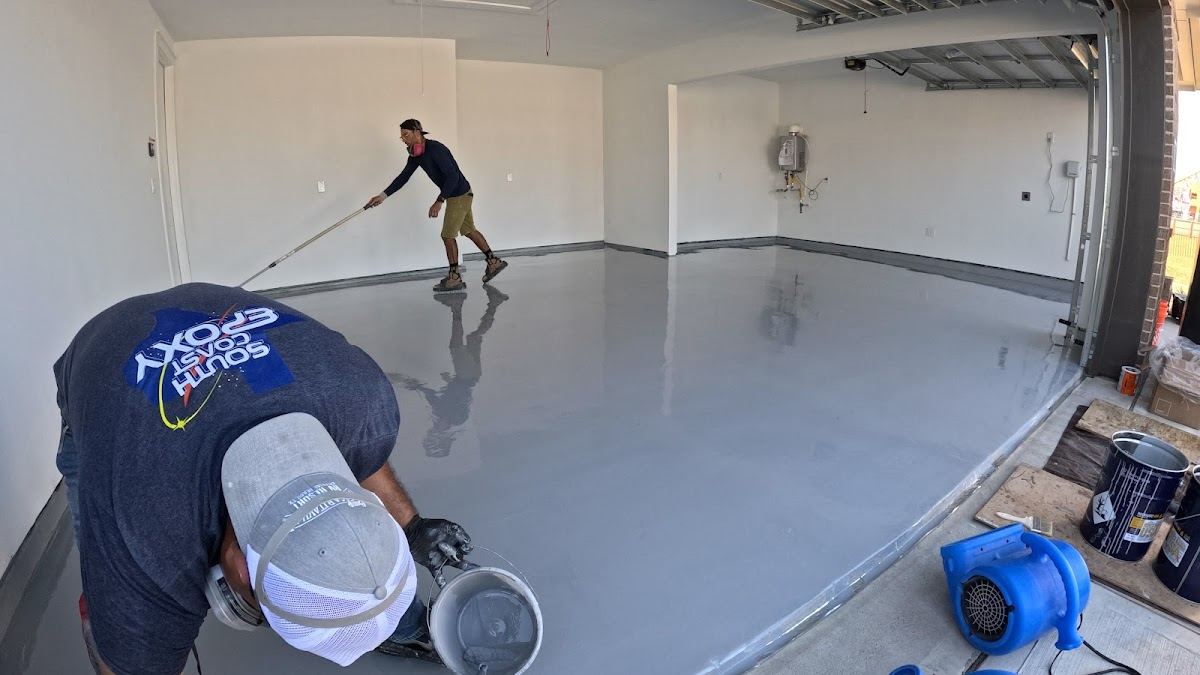
- Verification. We confirm the surface is clean, sound, profiled, and ready before a single drop of coating goes down.
If you want to see why this step is non-negotiable, our breakdown of concrete grinding before epoxy walks through exactly what good prep looks like.
Honest Cost Factors — What Actually Drives the Price
We won't quote a per-square-foot number sight unseen, because anyone who does is guessing. What we will do is tell you honestly what moves the price on a surface prep job:
- Square footage and layout. Bigger open slabs prep more efficiently; tight, cut-up spaces with lots of edges take longer.
- Slab and prep condition. A clean newer slab profiles quickly; one buried under old coatings, mastic, or heavy oil contamination takes serious removal work first.
- Repairs needed. Extensive cracking, spalling, or joint work adds material and labor.
- Profiling method. Shot blasting a warehouse and diamond grinding a garage are different scopes of work.
- Moisture conditions. If the slab needs a mitigation system, that's real product and labor on top of standard prep.
Andrew's approach is to recommend what your floor actually needs — not the priciest option, and not skipping steps to win on price. You get a clear scope and fair pricing, with the reasoning explained.
How Prep Compares — and Why It's Not Optional
The honest comparison isn't "prep vs. another product." It's "proper prep vs. cutting corners." A lowest-bid crew that acid-etches and rolls coating onto a smooth, untested slab can beat our price on paper — and that floor will often be peeling before the warranty conversation even happens. Whether you're choosing between epoxy flooring vs. polished concrete, or wondering how long epoxy flooring lasts, the answer always traces back to the prep underneath. The coating gets the credit; the prep does the work.
Maintenance and Longevity
Surface prep itself doesn't need maintenance — but it's the single biggest factor in how long the coating on top lasts. A properly profiled, repaired, moisture-managed slab is what lets an epoxy or concrete coating system reach its full service life with nothing more than routine cleaning. Cut the prep and you inherit recurring repairs, re-coats, and early replacement. Spend a little more on prep once, and the floor simply does its job for years.
Why Choose South Coast Epoxy
We're locally owned, based in League City, and we work the Gulf Coast every day — so we know what our heat, humidity, and slab-on-grade construction do to floors. With a 4.9 rating across 57 reviews, Andrew and his crew earned that reputation on clean prep, honest recommendations, clear communication, and a final walkthrough on every job. We do proper diamond grinding, real crack and spall repair, and genuine moisture testing — not the shortcuts that look fine on day one and fail by year one.
We serve League City, Houston, Clear Lake, Friendswood, and the surrounding Bay Area communities.
Ready to give your coating a foundation that actually lasts? Contact South Coast Epoxy for a free quote — email info@southcoastepoxy.com and tell Andrew about your slab. We'll assess it honestly and prep it right.
Recent Surface Preparation Projects
Our Process
Inspection & testing
Assess slab condition, contaminants and moisture.
Repairs
Fill cracks, joints and spalls; address damaged areas.
Mechanical profiling
Grind or shot-blast to the required CSP.
Decontamination
Remove oils, dust and residue.
Moisture management
Apply moisture-tolerant primer or mitigation where needed.
Verification
Confirm the surface is sound and ready to coat.
Related Services
Areas We Serve
Related Reading
Surface Preparation FAQs
Why does surface prep matter so much in Texas?
Our heat, humidity and slab-on-grade construction stress coatings; proper profiling and moisture management are what keep floors from blistering or peeling.
Do you test for moisture?
Yes. Where moisture is a concern we assess the slab and use moisture-tolerant primers or mitigation before coating.
What is CSP?
Concrete Surface Profile, the roughness of the prepped slab. Different systems need different profiles, and we match the prep to the floor going on top.
Can you fix cracks and spalls?
Yes, repairs to cracks, joints and spalls are part of preparing a sound substrate.
Can you prep a slab for another contractor's coating?
Yes. We provide standalone prep to spec, or carry the project through to finish.
Ready to Upgrade Your Floors?
Whether you need a garage epoxy floor, polished concrete, a commercial coating system, a restaurant floor, a warehouse floor, or a custom countertop finish, South Coast Epoxy will help you choose the right surface system for your space.
Prefer email? Reach us at info@southcoastepoxy.com