
Flooring Service
Industrial Epoxy Flooring in Texas
Heavy-duty floor systems built for forklifts, hangars and round-the-clock operations.
Industrial floors on the Gulf Coast face forklifts, dropped tools, chemicals and constant moisture. South Coast Epoxy installs heavy-duty epoxy systems for warehouses, aircraft hangars, shops and manufacturing floors across Texas, and Andrew has handled everything from huge surfaces to enclosed-trailer floors. We build for load, abrasion and chemical exposure, not just looks.
How it works
Industrial work typically uses high-build or troweled epoxy/mortar systems, often with quartz aggregate for impact and abrasion resistance, and a chemical-resistant topcoat. Proper CSP (concrete surface profile) from grinding or shot-blasting is critical so the system handles forklift traffic and thermal cycling without delaminating.
Benefits
- Withstands forklift, pallet-jack and heavy point loads
- Abrasion-, impact- and chemical-resistant build-up
- Seamless surface that is easy to clean and improves safety lighting
- Anti-slip and line-striping options for traffic zones
- Stands up to thermal cycling and Gulf-Coast moisture
- Long service life on properly profiled slabs
Best Used For
- Warehouses and distribution floors
- Aircraft hangars
- Manufacturing and fabrication shops
- Auto, fleet and equipment shops
- Enclosed-trailer and mobile-unit floors
- Loading docks and staging areas
Get a free industrial epoxy flooring quote
A warehouse floor takes a beating that few other surfaces ever see: forklift wheels grinding the same lanes day after day, dropped tools, pallet jacks, hydraulic oil, washdown chemicals, and Gulf-Coast humidity pushing up through the slab. Industrial epoxy flooring exists to absorb all of that and keep working for years. At South Coast Epoxy, owner Andrew and his crew install heavy-duty epoxy and polyaspartic systems engineered for load, abrasion, and chemical exposure across warehouses, aircraft hangars, manufacturing plants, and fleet shops throughout Texas and the Houston Bay Area.
What Industrial Epoxy Flooring Is and How the System Works
Industrial epoxy flooring is not a single product. It is a layered system bonded directly to your concrete slab, built thicker and tougher than a residential garage coating. A typical heavy-duty build starts with aggressive mechanical surface prep, then a primer that penetrates and grips the concrete, one or more high-build or troweled body coats (often filled with quartz or other aggregate for impact resistance), and a chemical-resistant topcoat sealed over the top.
The result is a seamless, non-porous, monolithic surface with no grout lines or joints to trap grime, no carpet to absorb spills, and no tile to crack under point loads. Where a thin film coating might run 4 to 10 mils, true industrial systems are built much thicker, sometimes 30 mils or more for high-build epoxy, and considerably thicker again for troweled mortar or urethane cement floors. That added build is what lets the floor survive forklift traffic and dropped steel without telegraphing every impact.
Key Benefits That Actually Matter on a Plant Floor
The headline benefit is durability, but it is worth being specific about what that buys you. A properly installed industrial floor shrugs off forklift, pallet-jack, and heavy point loads instead of cracking or denting. It resists abrasion in high-traffic lanes, so the surface does not wear through to bare concrete in the spots that get used the most. It stands up to oils, fuels, solvents, and washdown chemicals when finished with the right topcoat matched to your operation.
Just as important is what the floor does for the rest of the building. A seamless surface is far easier to sweep, scrub, and disinfect than raw or sealed concrete, which keeps your facility cleaner and cuts labor. A light, reflective finish bounces overhead light around and brightens the whole space, which improves safety and can reduce lighting load. And because the floor is sealed, your slab stops shedding the fine concrete dust that gets into product, machinery, and HVAC filters. Add anti-slip aggregate and traffic-lane striping, and the floor starts doing safety and organization work, not just protection.
Texas and Gulf-Coast Considerations You Cannot Skip
This is where a lot of out-of-state spec sheets fall apart. Texas slabs, especially around League City, Houston, and the Bay Area, are usually slab-on-grade poured over expansive clay soils, and they live in heat and humidity year-round. Three issues drive everything:
- Moisture vapor emission. Water vapor migrates up through slab-on-grade concrete constantly. If you coat over a slab that is pushing too much moisture, the system can blister, bubble, or delaminate months later. That is why we moisture-test before we commit to a system and choose products that tolerate or block vapor drive when needed.
- Thermal cycling. Hangars, warehouses, and shops with big roll-up doors swing through wide temperature ranges. The coating has to expand and contract with the slab without losing its bond, which again comes back to proper profile and the right system chemistry.
- Slab movement and cracking. Expansive soils move. We address joints, cracks, and spalls during prep with proper crack and slab repair rather than burying them under epoxy and hoping.
Getting these right is the difference between a floor that lasts and one that peels. Our experience with Gulf-Coast moisture and slab-on-grade behavior is a core reason local operators bring us in. You can read more in our guide on concrete grinding before epoxy.
Industrial Systems and Finishes We Install
There is no single "best" industrial floor — the right system depends on your loads, chemicals, and downtime tolerance. Common options include:
| System | Best for | Notes |
|---|---|---|
| High-build epoxy | General warehouse and distribution floors | Thicker mil build for forklift traffic and abrasion |
| Quartz-filled / troweled mortar | Manufacturing, impact zones, loading docks | Dense, impact- and slip-resistant; rebuilds worn slabs |
| Polyaspartic / polyurethane topcoat | Fast turnarounds, UV areas, washdown | Fast-cure, chemical- and abrasion-resistant finish |
| Anti-slip broadcast | Ramps, wet zones, traffic lanes | Aggregate broadcast into the topcoat for traction |
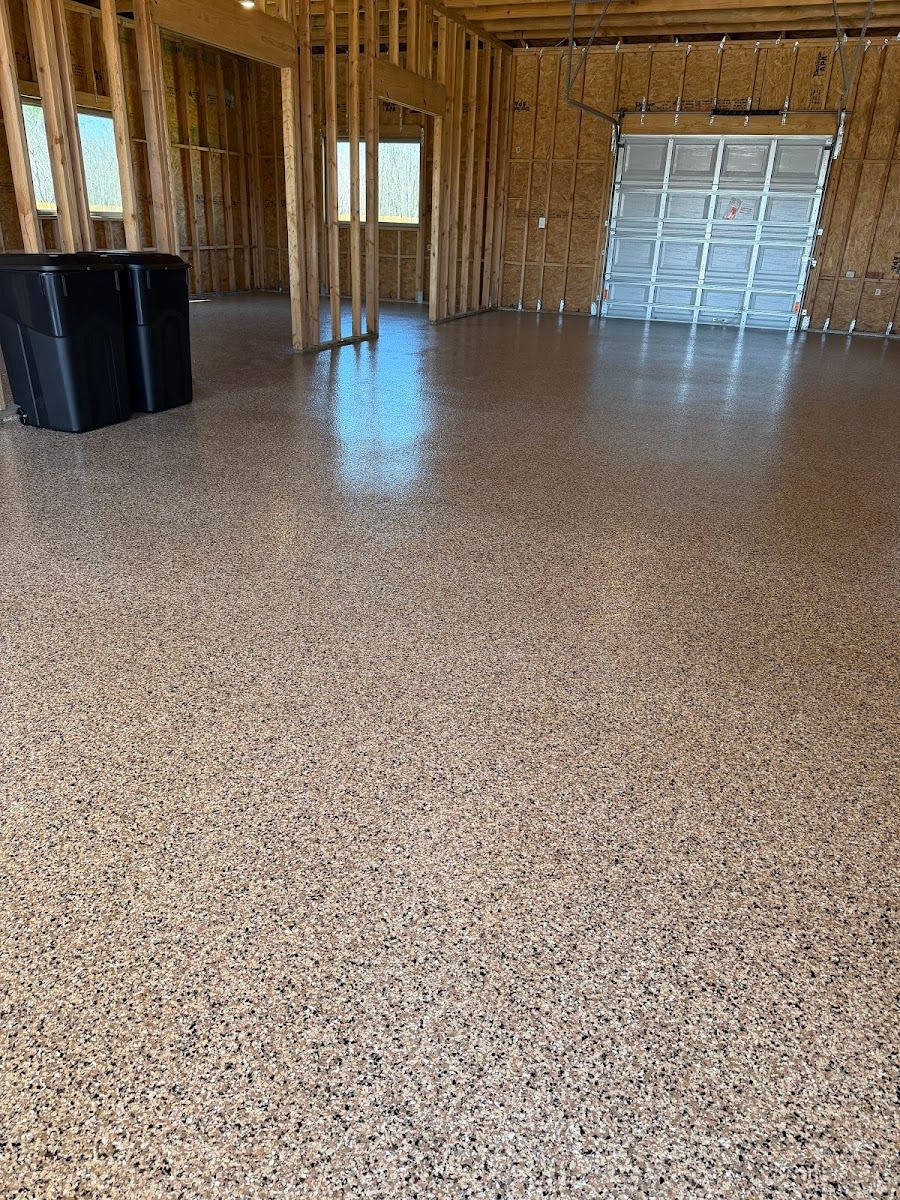
Polyaspartic topcoats deserve a special mention for industrial work because they fast-cure, which can let a section return to service in a day or two instead of a week, a big deal when you cannot shut the whole building down. For spaces that prioritize a clean, low-maintenance look over a thick built-up coating, concrete polishing or a grind-and-seal can be a better fit, and we will tell you honestly when that is the case. We also handle decorative options like flake epoxy floors and quartz epoxy floors where appearance and durability both matter.
Who and What Industrial Epoxy Is Best For
Industrial epoxy flooring fits any operation where the floor is part of the equipment:
- Warehouses and distribution centers — forklift lanes, racking aisles, and staging areas. See our dedicated warehouse flooring page.
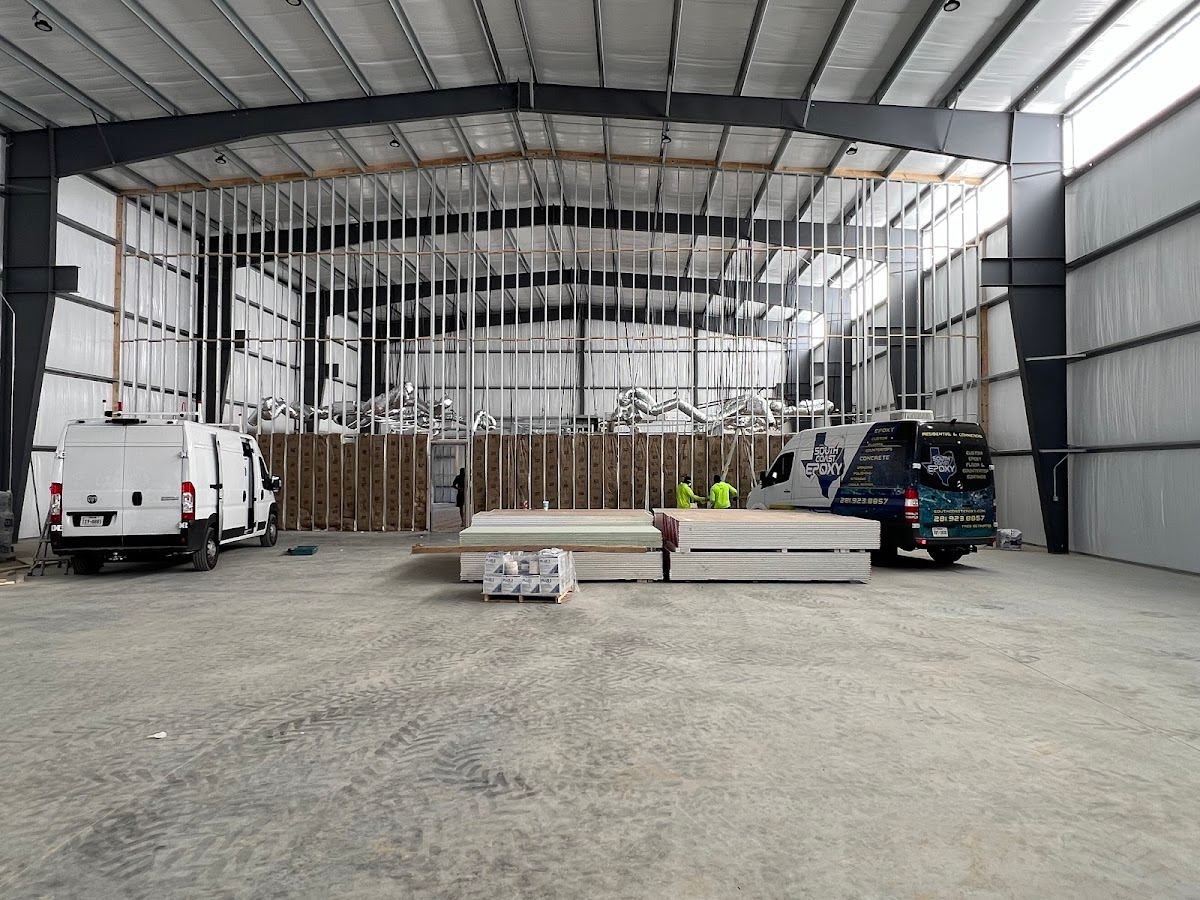
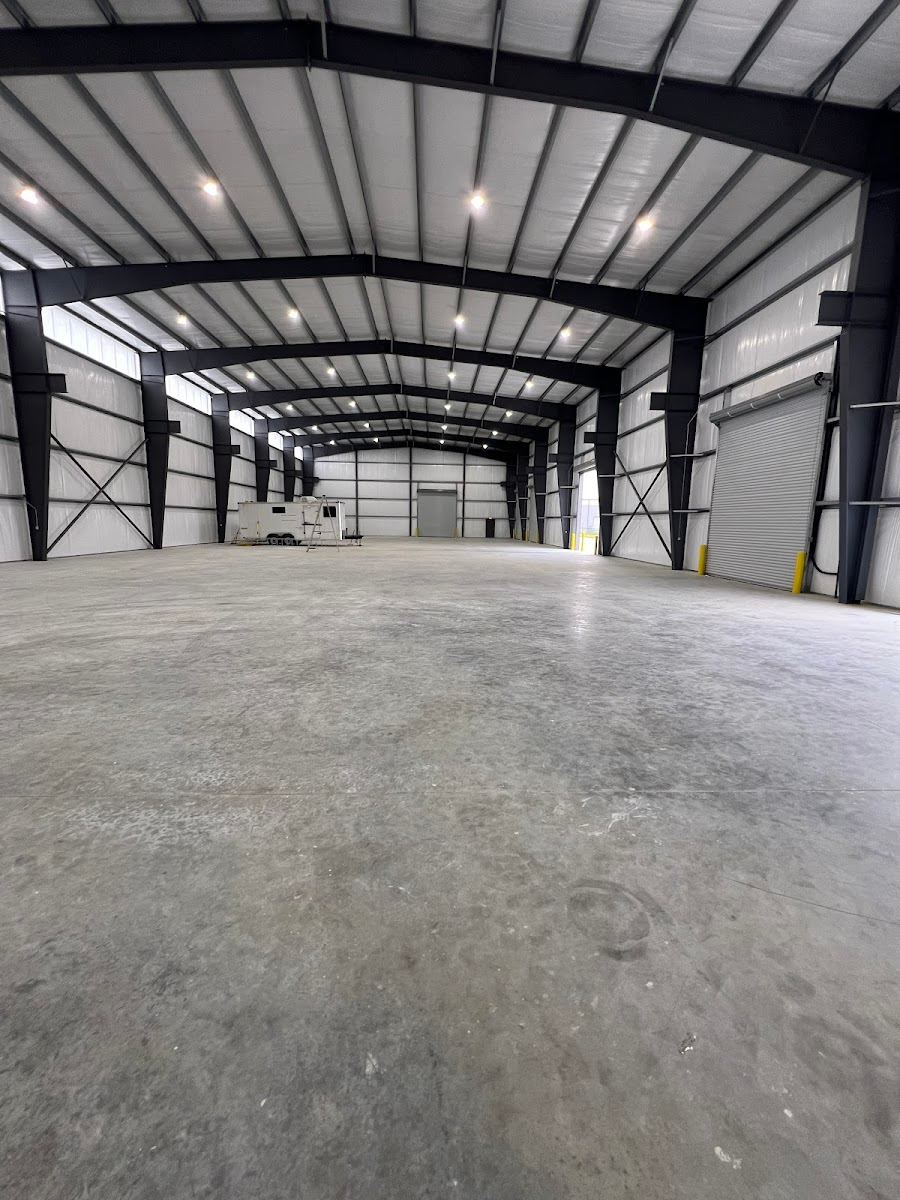
- Aircraft hangars — large open spans that need fuel and hydraulic resistance plus a bright, even finish. Hangar floors are among the large surfaces Andrew and the crew regularly handle.
- Manufacturing and fabrication shops — impact zones, machine bases, and chemical exposure.
- Auto, fleet, and equipment shops — oil, brake fluid, and tire traffic. We also do dedicated garage and auto-shop floors.
- Loading docks and staging zones — high-abrasion areas that benefit from troweled, aggregate-filled systems.
For lighter-duty or customer-facing commercial spaces — restaurants, retail, gyms, clinics — our commercial epoxy flooring systems are usually the better match.
The Installation Process, Step by Step
Prep is 80% of the job. A floor fails because of bad prep far more often than bad product, so this is where we spend our care.
- Load and exposure assessment. We define your traffic, chemicals, and tolerances so the system is specced to reality, not a brochure.
- Aggressive surface preparation. We diamond-grind or shot-blast the slab to the correct CSP (Concrete Surface Profile) so the system mechanically locks in. We never coat over a smooth or contaminated slab. Learn more about our surface preparation and concrete grinding work.
- Repairs and moisture testing. Cracks, spalls, and joints are repaired, and the slab is moisture-tested before we choose the final system.
- High-build or mortar base. We install the body coats — quartz-filled where impact and load demand it.
- Chemical-resistant topcoat. Sealed against the specific oils, fluids, and cleaners your operation uses, with anti-slip aggregate where needed.
- Striping, markings, and staged cure. Traffic lanes and safety zones go in, then we plan a staged return to service so the floor cures fully before it carries load.
For large facilities, we phase the prep and install by section so your operation keeps moving and new coatings are protected during cure.
Honest Cost Factors (No Made-Up Numbers)
We will not quote a price per square foot sight unseen, because the honest answer is that it depends. The biggest drivers are:
- Square footage — larger floors generally cost less per foot, but mobilization still matters.
- Slab and prep condition — a clean, sound slab is cheaper to prep than one with heavy contamination, coatings to remove, or extensive cracking and spalling.
- System chosen — a high-build epoxy costs less than a troweled quartz mortar floor or a urethane-cement system, and a polyaspartic topcoat adds cost but buys speed and durability.
- Repairs and moisture mitigation — failing joints, slab repair, or a high moisture reading add scope.
- Striping, anti-slip, and markings — added safety and organization features.
Our promise is straightforward: we recommend the system your floor actually needs, not the priciest upsell, and we put it in writing after we see the slab. For more on long-term value, see how long epoxy flooring lasts.
How It Compares to the Alternatives
Bare or sealed concrete is cheapest up front but dusts, stains, and absorbs chemicals. Tile cracks under point loads and traps grime in grout lines. Polished concrete is excellent for clean, dry, low-chemical spaces and is genuinely lower-maintenance, but it does not add a chemical barrier the way a coating does — our epoxy vs. polished concrete breakdown covers the trade-offs. For most heavy-traffic industrial floors exposed to forklifts and chemicals, a properly built epoxy or polyaspartic system gives the best balance of toughness, cleanability, and service life. You can also compare options across facilities in our guide to the best commercial flooring for warehouses in Texas.
Maintenance and Longevity
A correctly installed industrial floor on a properly profiled slab can serve for many years with simple care: routine sweeping or auto-scrubbing, prompt cleanup of aggressive spills, and a re-coat of the topcoat when wear shows in the busiest lanes. Because the surface is seamless and non-porous, cleaning is fast and disinfecting is easy. Refreshing a worn topcoat is far cheaper than replacing a failed floor, which is exactly why the prep and system choice up front matter so much. If a floor does need attention down the road, our floor repair and maintenance team can handle it.
Why Choose South Coast Epoxy
We are locally owned and based in League City, and Andrew runs the work himself — you deal with the person responsible for the floor, not a call center. We are honest about what your slab needs, we do clean, thorough prep with proper diamond grinding, crack repair, and moisture testing, we communicate clearly through the job, and we finish with a real walkthrough. With 57 reviews and a 4.9 rating, that approach has earned the trust of operators across the Bay Area. We serve League City, Houston, Clear Lake, Friendswood, and the surrounding communities.
Ready to put a floor down that keeps up with your operation? Request a free quote or email us at info@southcoastepoxy.com with your facility size and what runs across the floor, and Andrew will help you spec the right industrial epoxy flooring system for your Texas slab.
Recent Industrial Epoxy Flooring Projects
Our Process
Load & exposure assessment
Define traffic, chemicals and tolerances.
Aggressive prep
Shot-blast or grind to the correct CSP; repair joints and spalls.
High-build / mortar base
Quartz-filled system for impact and load.
Chemical-resistant topcoat
Sealed against oils, fluids and washdown.
Striping & safety markings
Traffic lanes, zones and anti-slip as needed.
Cure & load-in plan
Staged return to service to protect the floor.
Related Services
Areas We Serve
Related Reading
Industrial Epoxy Flooring FAQs
Can the floor handle forklifts and heavy equipment?
Yes. We build high-build or quartz-filled systems on a properly profiled slab specifically for heavy point loads and forklift traffic.
Do you coat aircraft hangars?
Yes. Hangar floors are among the large surfaces Andrew and the crew regularly handle.
Is the system chemical-resistant?
We specify chemical-resistant topcoats matched to the oils, fluids and cleaners your operation uses.
Can you add safety striping?
Yes. Traffic lanes, zone markings and anti-slip aggregate can all be built into the system.
Can you phase a large facility?
We stage prep and install by section to keep operations moving and protect new coatings during cure.
Ready to Upgrade Your Floors?
Whether you need a garage epoxy floor, polished concrete, a commercial coating system, a restaurant floor, a warehouse floor, or a custom countertop finish, South Coast Epoxy will help you choose the right surface system for your space.
Prefer email? Reach us at info@southcoastepoxy.com