
Flooring Service
Garage Epoxy Flooring in League City, TX
Showroom-clean garage floors that shrug off hot tires, oil and Texas summers.
A garage in League City takes a beating from hot tires, oil drips, humidity and heavy traffic. South Coast Epoxy coats residential garage floors across League City, Houston, Clear Lake and Friendswood with flake and polyaspartic systems built to handle it. Several of our customers had us out the week they moved in; Andrew works around your schedule and walks you through color options before a single coat goes down.
How it works
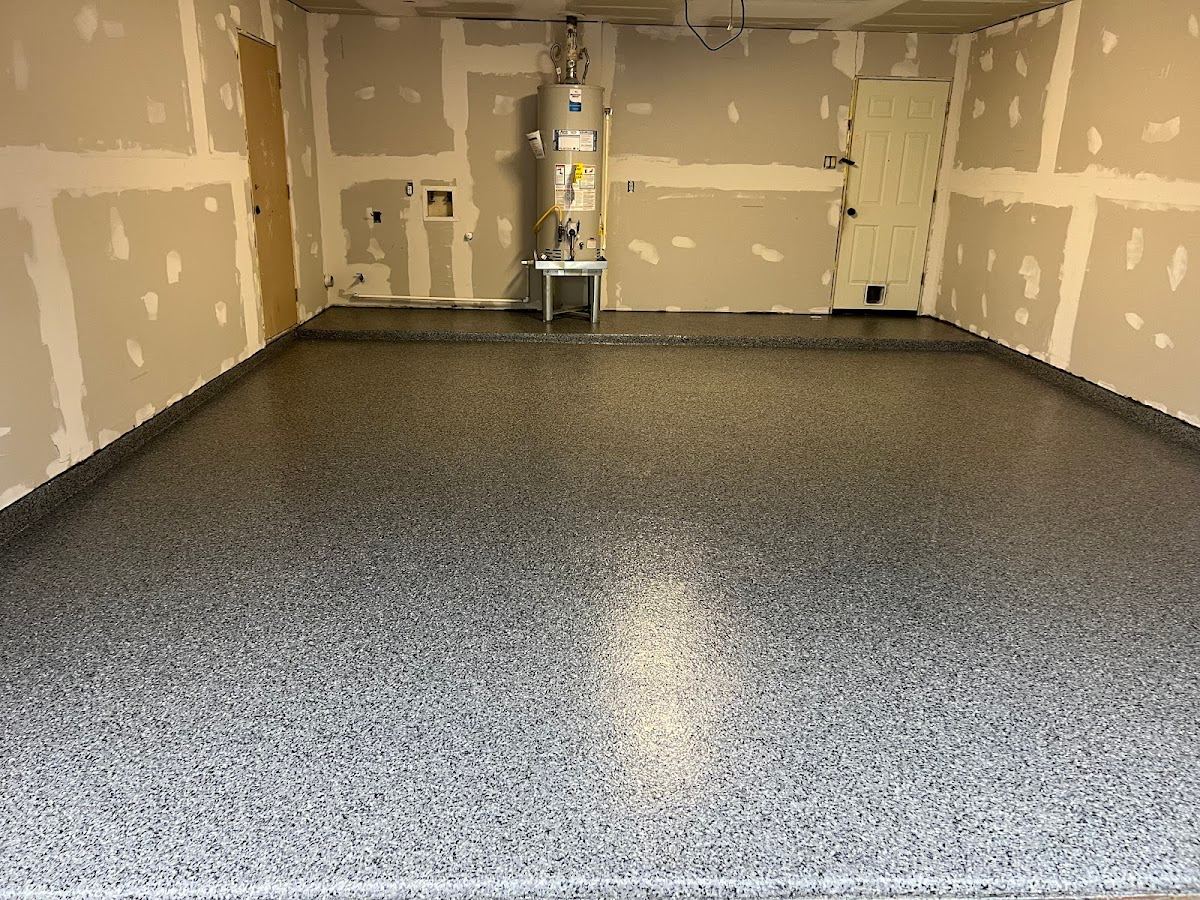
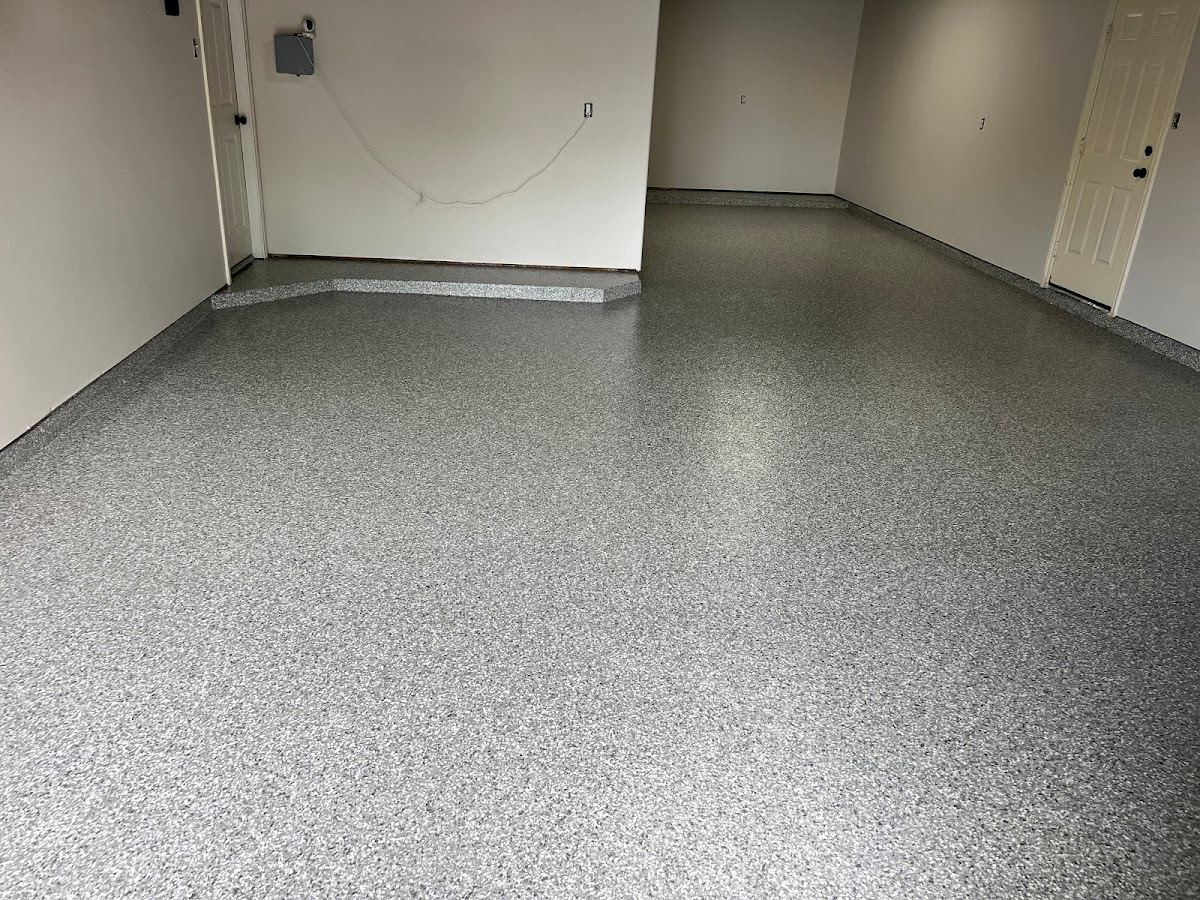
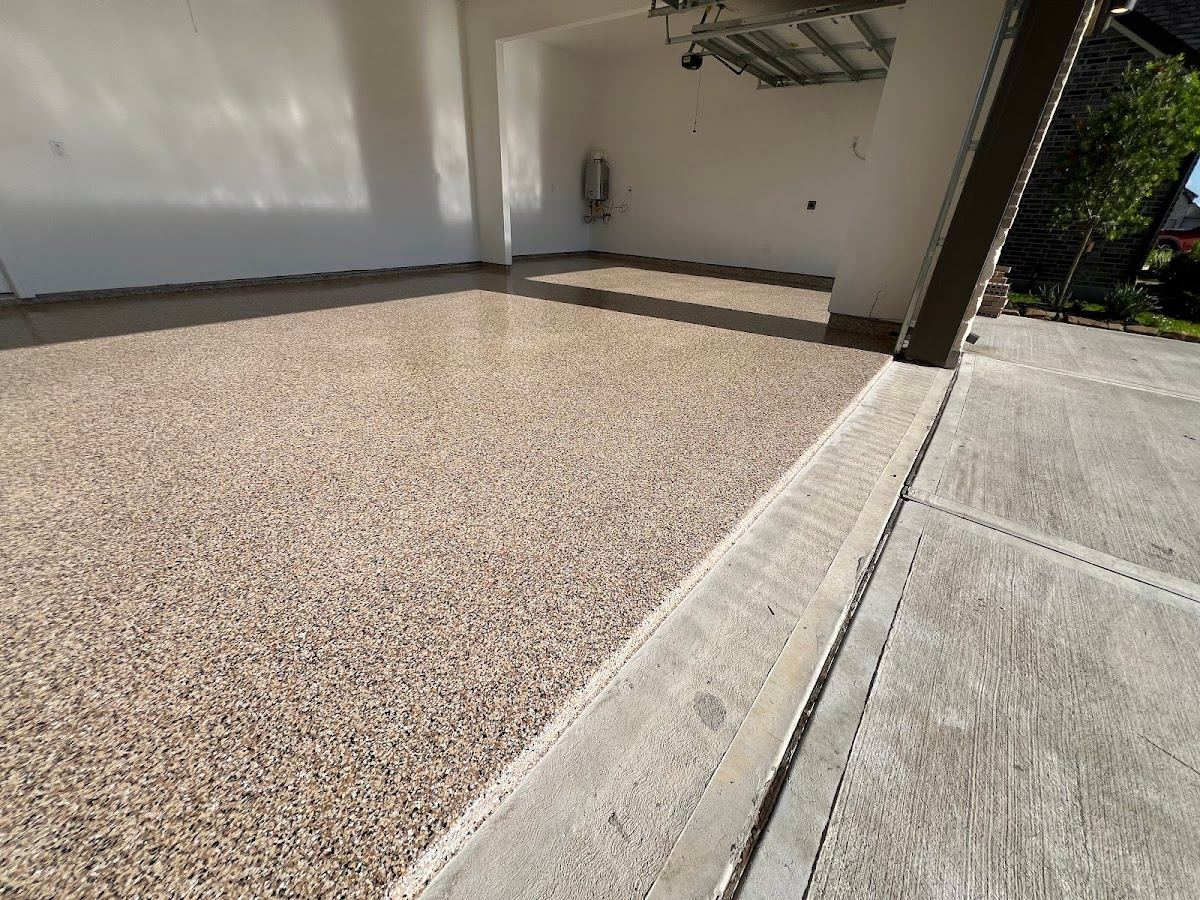
Most garages get a decorative flake (chip) system: a pigmented base coat, broadcast vinyl flakes for grip and a speckled look, then a clear topcoat. We often finish with a polyaspartic topcoat because it cures fast, resists hot-tire pickup better than standard epoxy, and is UV-stable so it will not yellow near open garage doors.
Benefits
- Resists hot-tire pickup, oil, brake fluid and chemicals
- Anti-slip texture from the flake broadcast for wet-traction safety
- Fast-curing polyaspartic options get you back in the garage sooner
- Easy to sweep and mop with no dusting concrete
- Hides slab imperfections with custom flake blends
- Brightens the space and adds resale appeal
Best Used For
- Single, double and oversized residential garages
- Workshops and hobby or maker spaces
- Home gyms in the garage
- Barndominium and shop garages
- New-construction garages before move-in
- Garages doubling as storage or laundry areas
Get a free garage epoxy flooring quote
Your garage floor is the hardest-working slab in the house, and in the Gulf Coast it takes a beating most people never plan for: hot tires baking in from a 100-degree drive, oil and brake fluid, road salt off the causeway, and the slow grind of humidity working on bare concrete. A real garage epoxy flooring system fixes all of that at once. South Coast Epoxy builds bonded, layered floors that shrug off hot-tire pickup, wipe clean with a mop, and look like a showroom for years instead of peeling like a big-box kit. Here is exactly what goes into one and why it lasts here in garage floor epoxy Houston and League City territory.
What Garage Epoxy Flooring Actually Is
"Epoxy flooring" is shorthand for a multi-coat resinous coating system that is mechanically bonded to your concrete slab. It is not paint and it is not a peel-and-stick mat. A proper garage system is built in layers: a pigmented base coat that grips the prepared concrete, a decorative broadcast of vinyl flakes (chips) for texture and looks, and one or more clear topcoats that carry the wear, chemical resistance, and gloss.
The resins do the heavy lifting. Epoxy is the structural, high-build body coat that bonds tight and fills the slab. Polyaspartic (a fast-cure polyurea) is the premium topcoat we reach for most often because it cures in hours instead of days, resists hot-tire pickup far better than standard epoxy, and is UV-stable so it will not yellow near an open garage door. Done right, the finished floor behaves as one seamless, non-porous surface with no grout lines, no dusting, and nowhere for oil or moisture to hide. For a broader look at how these systems work across applications, see our epoxy flooring overview.
Key Benefits for a Texas Garage
The payoff is durability you can feel underfoot. A professionally installed flake system resists hot-tire pickup, motor oil, brake fluid, antifreeze, and household chemicals, so a dropped wrench or a leaky oil pan does not stain the slab. The flake broadcast gives the surface a subtle anti-slip texture, which matters when you track in rain or wash a vehicle inside.
Day to day, the floor sweeps and mops clean in minutes and never sheds the fine gray dust that bare concrete constantly gives off. It brightens the whole space by reflecting light, hides minor slab imperfections under the chip blend, and adds real resale appeal in a market where buyers notice a finished garage. With a polyaspartic topcoat you also get a fast return to service, often back on the floor the same day and parking within a day or two.
Gulf Coast Heat, Humidity, and Slab Moisture
This is where most failed garage floors go wrong, and where local know-how matters more than any product badge. Our slabs are almost all slab-on-grade poured directly over soil, which means moisture vapor is constantly trying to migrate up through the concrete. If a coating is laid over a slab pushing too much moisture, it will bubble, blister, or delaminate no matter how good the resin is. We check for this with moisture testing before we coat, and we choose a system the slab can actually support.
Heat is the second factor. A car that has been on I-45 in August rolls in with tires near 140 degrees, and a thin or poorly bonded coating literally lets the tire pull the finish off the floor. The fix is mechanical bond plus the right chemistry: a diamond-ground profile so the resin keys into the concrete, and a polyaspartic topcoat engineered to resist hot-tire transfer. UV stability matters too, since the bay nearest the open door sees real sunlight, and a non-UV-stable epoxy will amber over time. Building for these specific conditions, rather than installing a generic kit, is the whole reason a local crew is worth it.
Systems and Finishes to Choose From
Most garages get a full-flake (full-broadcast) chip system, but there are several directions you can take the look and performance.
| System | Best for | What you get |
|---|---|---|
| Full-flake broadcast | Most garages | Anti-slip texture, hides imperfections, widest color range |
| Polyaspartic topcoat | Hot-tire and fast turnaround | UV-stable, same-day cure, max chemical resistance |
| Solid color epoxy | Clean, budget-minded look | Smooth uniform color, easy to clean |
| Metallic epoxy | Showpiece floors, man-caves | Marbled, three-dimensional pigment effects |
| Quartz broadcast | Heavy workshops, wet areas | Maximum slip resistance and impact toughness |
We most often pair a pigmented epoxy base with a full-flake broadcast and a polyaspartic clear, which is the sweet spot of durability, grip, and looks for a Texas garage. If you want something more dramatic, our metallic epoxy floors deliver a marbled showpiece look, while a dense flake epoxy floors broadcast maximizes hide and traction. Not sure which fits your slab and budget? Our guide to the best flooring options for Texas garages lays out the trade-offs.
Who and What It Is Best For
Garage epoxy is the obvious fit for single, double, and oversized residential garages, but the same systems serve a lot of nearby uses. We coat workshops and maker spaces where dropped tools and chemicals are routine, home gyms where you want cushion-friendly, easy-clean flooring, and barndominium and shop garages that double as work bays. New-construction garages are an ideal time to coat, since the slab is clean and you can have it done before a single box gets moved in.
If your garage doubles as a laundry, storage, or hobby zone, the seamless surface keeps it sanitary and simple to clean. And if your project has grown beyond the garage into a patio, carport, or detached shop, we handle those too. For light-commercial work bays and auto shops, our garage floor coatings and industrial epoxy flooring systems step up to heavier traffic and equipment loads.
The Installation Process, Step by Step
Prep is 80 percent of a floor that lasts, and it is exactly what DIY kits skip. Here is how Andrew and the crew build a garage floor.
- Color and finish consult. You pick a flake blend and finish, and Andrew shares photos of similar completed floors so you know what to expect.
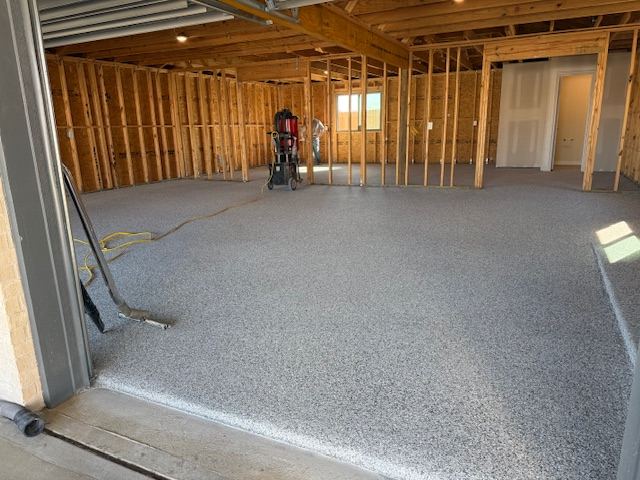
- Diamond grinding. We mechanically grind the slab with diamond tooling to open the concrete and create the right surface profile (CSP) for a permanent bond, then vacuum the dust.
- Crack and spall repair. Cracks, pits, and spalled spots get filled and patched with rigid repair compounds so they do not telegraph through the finish. See why concrete grinding before epoxy makes or breaks the result.
- Base coat. A pigmented epoxy or polyaspartic base coat is rolled and squeegeed to a uniform film.
- Flake broadcast. We broadcast chips to refusal into the wet base, then scrape and vacuum the excess once cured for a smooth, even texture.
- Clear topcoat. One or more polyaspartic or epoxy clear coats lock in the flake and carry the wear, gloss, and chemical resistance.
- Cure and return. We confirm your walk-on and drive-on times before we leave so you know exactly when to use the space.
Surface preparation is the part we will never cut, because it is the part that fails first when it is skipped. Our dedicated surface preparation and concrete grinding pages go deeper on the why.
Honest Cost Factors (No Gimmicks)
We will not quote a magic per-square-foot number on a web page, because an honest price depends on your actual slab. The biggest drivers are square footage (a single bay versus a three-car), the condition of the concrete (a clean newer slab grinds fast, while a cracked or oil-soaked one needs repair and remediation), and the system you choose (a full-flake polyaspartic build costs more than a basic solid color, and metallic or quartz cost more again).
Repairs move the number too. Significant cracking, spalling, or moisture issues add prep work, but addressing them is the difference between a floor that lasts and one that lifts in a year. Andrew gives you a firm, itemized quote up front after seeing the slab, and he recommends the system that actually fits your garage, not the priciest upsell. If a solid color is all you need, that is what we will tell you.
How It Compares to the Alternatives
A big-box DIY epoxy kit is the most common comparison, and the honest answer is that those kits use thin, water-based coatings applied over an acid-etched (not ground) slab. Under Texas heat and hot tires they commonly peel within a season. The materials and the prep are simply not in the same category as a ground-and-bonded professional system.
Bare or sealed concrete is cheaper but keeps dusting, staining, and absorbing moisture. Polished concrete is a great option for some spaces, but it does not add the chemical resistance or the hide-the-imperfections look that a flake garage floor does; if you are weighing the two, our epoxy flooring vs polished concrete breakdown compares them head to head, and we also offer concrete polishing where it is the better fit.
Maintenance and Longevity
One of the best things about a properly installed garage floor is how little it asks of you. Sweep or dust-mop as needed, and damp-mop with a mild cleaner for spills. Wipe up oil, fuel, or chemicals when you see them, use furniture pads under jack stands and heavy shelving, and avoid dragging sharp steel across the surface. That is essentially the whole routine, covered in detail in our guide to maintaining an epoxy garage floor.
Longevity comes down to prep and product, both of which we control. A professionally ground, properly coated polyaspartic-topped floor holds up for many years of daily parking and traffic, and you can read realistic expectations in how long epoxy flooring lasts. When a floor does eventually need a refresh, it is usually a new clear topcoat rather than a full rebuild, and our floor repair and maintenance team handles that too.
Why Choose South Coast Epoxy
South Coast Epoxy is locally owned and run by Andrew right here in League City, with a 4.9 rating across 57 reviews built on doing the prep right and communicating clearly. We know Gulf Coast slabs, we moisture-test before we coat, and we diamond-grind every floor instead of cutting corners with an etch. You get honest recommendations, fair pricing, a clean job site, and a final walkthrough where we confirm cure and drive-on times before we hand it back.
We serve homeowners across the Bay Area, including League City, Houston, Clear Lake, and Friendswood, along with Kemah, Seabrook, Webster, Pearland, and Galveston.
Ready for a garage floor that handles Texas summers and hot tires without peeling? Contact South Coast Epoxy or email Andrew at info@southcoastepoxy.com for a free, no-pressure quote. We will look at your slab, talk through honest options, and give you a firm timeline and price before any work begins.
Recent Garage Epoxy Flooring Projects
Our Process
Color & finish consult
Pick a flake blend; Andrew shares photos of similar completed floors.
Grind & repair
Diamond-grind the slab, fill cracks and patch spalls.
Base coat
Pigmented epoxy or polyaspartic base coat.
Flake broadcast
Broadcast chips to refusal, then scrape and vacuum the excess.
Clear topcoat
Polyaspartic or epoxy topcoat for durability and gloss.
Cure & return
We confirm walk-on and drive-on times.
Related Services
Areas We Serve
Garage Epoxy Flooring FAQs
Will the coating handle hot tires?
Yes. We use polyaspartic and properly prepped systems specifically chosen to resist hot-tire pickup, a common failure point for DIY kits.
How long does a garage floor take?
Many garages can be completed in as little as one to a few days depending on size, repairs and the system; polyaspartic speeds turnaround. We give you a firm timeline up front.
Can you do it before we move into a new home?
Absolutely. Several customers schedule us right before move-in, and Andrew adjusts the schedule to hit your date.
Is the floor slippery when wet?
The flake broadcast adds texture for traction, and we can add anti-slip media to the topcoat for extra grip.
Why not a big-box DIY kit?
DIY kits often skip mechanical prep and use thin coatings that peel under Texas heat and hot tires. We grind the slab and build a bonded, layered system.
Ready to Upgrade Your Floors?
Whether you need a garage epoxy floor, polished concrete, a commercial coating system, a restaurant floor, a warehouse floor, or a custom countertop finish, South Coast Epoxy will help you choose the right surface system for your space.
Prefer email? Reach us at info@southcoastepoxy.com