
Flooring Service
Restaurant Flooring Contractors in Houston, TX
Slip-resistant, sanitary kitchen and bar floors that pass inspection and stay open.
Restaurant kitchens are one of the toughest floors there is — grease, water, heat, carts and constant cleaning. South Coast Epoxy installs slip-resistant, sanitary flooring for restaurants, bars and commercial kitchens across Houston and League City. We schedule around service so Andrew and the crew can get in, install, and get you reopened with minimal downtime.
How it works
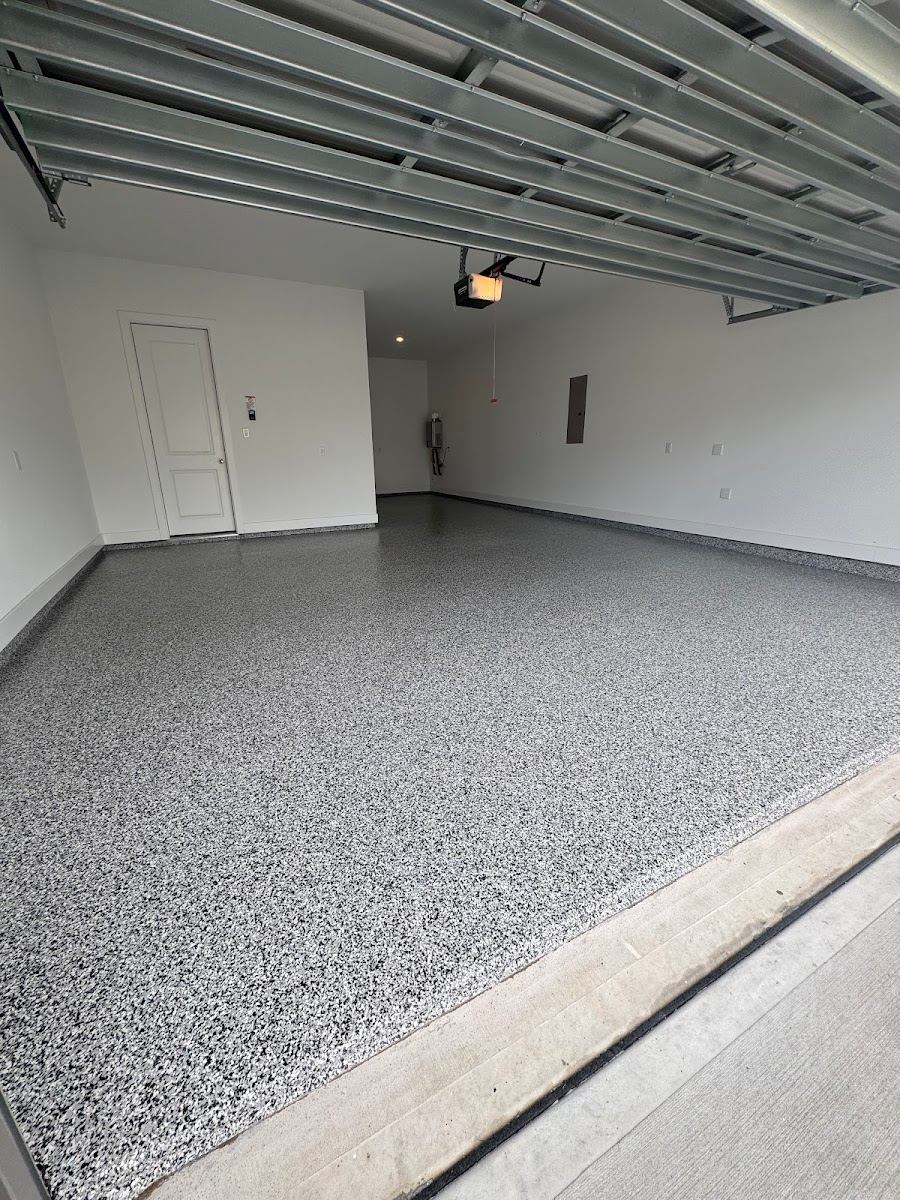
Restaurant floors typically use a quartz or high-build epoxy system with anti-slip aggregate for wet, greasy conditions, finished with a chemical-resistant topcoat and integral cove base for a seamless, cleanable transition up the wall. This eliminates grout lines and seams where bacteria hide, supporting health-code sanitation.
Benefits
- Anti-slip traction for wet, greasy kitchens
- Seamless, sanitary surface with cove base option
- Resists grease, water, food acids and cleaners
- Easy to clean and disinfect for health compliance
- Fast-cure options to limit closure time
- Durable under carts, traffic and heat
Best Used For
- Commercial and restaurant kitchens
- Bars and beverage stations
- Dishwashing and prep areas
- Walk-in coolers and storage
- Cafes, breweries and food halls
- Front-of-house and dining floors
Get a free restaurant flooring quote
A restaurant kitchen floor takes more abuse than almost any surface in Texas: standing water, hot grease, food acids, sharp cart wheels, boiling spills, harsh sanitizers, and a health inspector who expects it spotless. A floor that cracks, peels, or gets slick is a safety hazard and a failed inspection waiting to happen. South Coast Epoxy builds seamless, slip-resistant restaurant flooring in Houston and across the Bay Area that holds up to real kitchen conditions, cleans up fast, and keeps you open for business.
What Restaurant Flooring Is and How the System Works
Restaurant and commercial kitchen flooring is a poured, fully bonded resin system installed directly over your concrete slab. Instead of tile and grout, you get one continuous, non-porous surface with no seams, joints, or grout lines for grease and bacteria to hide in. That seamless quality is the whole point: it is what makes the floor sanitary, easy to disinfect, and compliant with health-code expectations for commercial kitchen flooring in Texas.
A typical kitchen build has three working layers. First, a high-strength base coat or mortar bonds to a properly profiled slab. Second, an anti-slip aggregate, usually a graded quartz or aluminum-oxide media, is broadcast into the wet coat to build traction. Third, a chemical-resistant topcoat locks everything in and creates the cleanable, washdown-ready surface. Where the floor meets the wall, we form an integral cove base, a curved transition that eliminates the 90-degree crevice where grime collects. The result is a floor that drains, scrubs, and sanitizes the way a busy kitchen actually needs.
Key Benefits for a Busy Kitchen
The biggest win is sanitation. A seamless floor with cove base has nowhere for food residue, grease, or standing water to lodge, so your closing crew can squeegee and sanitize the whole surface in one pass. Tile, by comparison, traps grime in dozens of feet of grout and needs constant re-grouting once those lines fail.
Traction is the second. We size the anti-slip aggregate to the conditions, heavier in a wet dish pit or fryer line, finer in a prep area, so staff keep their footing even on a greasy, wet floor. Slip-and-fall claims are one of the most common and expensive incidents in food service, and the right texture meaningfully reduces that risk.
Beyond that, these floors resist what a kitchen throws at them: hot grease, citrus and vinegar acids, animal fats, quat sanitizers, and bleach. They take the pounding of loaded carts and Hobart traffic without chipping. And with fast-cure options, we can get many areas back in service quickly so you lose minimal revenue during install.
Texas and Gulf-Coast Considerations
This is where local experience matters. Most Houston-area restaurants sit on slab-on-grade foundations with no basement, which means the slab is in direct contact with damp Gulf-Coast soil. That slab pushes moisture vapor upward, and if a coating is installed over a wet slab without testing, the vapor pressure can blister or delaminate the floor within months. We run moisture testing before we coat, and when readings are high we use a moisture-mitigation primer rated for the vapor drive instead of gambling on it.
Heat is the other factor. Between Houston's climate and the thermal shock of boiling water and steam hitting a cool floor near dish areas, a thin coating can crack. For heavy wet zones, dish pits, and washdown areas we often recommend a urethane-cement (urethane mortar) system, which is built specifically to handle thermal shock and aggressive cleaning that would break down a standard epoxy. Slab movement from our expansive clay soils also means cracks need real attention. We chase and fill cracks and honor moving joints during surface preparation rather than skinning over them, so they do not telegraph back through the new floor.
Systems and Finishes We Install
There is no single "restaurant floor." We match the system to the zone:
| Area | Recommended system | Why |
|---|---|---|
| Cook line, prep, back-of-house | High-build epoxy with quartz broadcast | Tough, slip-resistant, chemical-resistant |
| Dish pit, wet zones, walk-ins | Urethane cement / mortar | Handles thermal shock, steam, heavy washdown |
| Bars and beverage stations | Quartz or decorative flake epoxy | Sanitary, attractive, easy to wipe |
| Dining room / front-of-house | Polished concrete or decorative epoxy | Clean look, low maintenance |
For most kitchens we lean on a quartz epoxy floor, because the broadcast quartz gives both the structural body and the dependable traction a wet kitchen needs. When you want a fast reopen, a polyaspartic topcoat cures in hours rather than days. For the dining room, where you care more about looks than washdown chemicals, polished concrete or a decorative finish often makes more sense than a full coating. For a deeper dive into the systems, see our guide on epoxy flooring for restaurants in Houston.
Who and What It Is Best For
Our restaurant systems fit the full range of food-service spaces in the Bay Area:
- Commercial and restaurant kitchens, cook lines, and prep areas
- Dishwashing pits, wet zones, and washdown rooms
- Bars, beverage stations, and tap rooms
- Walk-in coolers, freezers, and dry storage
- Breweries, cafes, food halls, and ghost kitchens
- Front-of-house and dining floors
The same seamless, sanitary logic carries into adjacent spaces. If you also run a counter-service storefront or grab-and-go area, our retail flooring work pairs naturally with the kitchen. Multi-unit operators and property groups can bundle kitchen, dining, and back-of-house under one commercial epoxy flooring scope.
The Installation Process
A kitchen floor is only as good as its prep, and prep is where shortcuts show up later as peeling. Our process runs like this:
- Site and code review. We walk the space, note slip needs, drains and slopes, chemical exposure, and your sanitation requirements, then plan the systems by zone.
- Scheduling around service. We phase the work or install after-hours and in sections so you can keep operating where possible. Reopen timing is set up front.
- Mechanical surface prep. We diamond-grind or shot-blast the slab to an open, bondable profile (a CSP in the 2-3 range for most coatings), then run moisture testing. This is the difference between a floor that bonds for years and one that lifts. More on that in concrete grinding before epoxy.
- Repairs and cove base. We fill cracks, repair spalls, mitigate moisture where needed, and form the integral cove base up the wall for that sanitary radiused junction inspectors look for.
- System build. Base coat, anti-slip aggregate broadcast, and the build coats are installed to the spec for each area.
- Chemical-resistant topcoat. A grease- and sanitizer-resistant topcoat seals the surface. Polyaspartic options cure fast for a quick return to service.
- Final walkthrough. We confirm return-to-service timing and hand off a simple care plan your staff can actually follow.
Honest Cost Factors
We will not quote a per-square-foot number sight unseen, because the honest answer is that price depends on the floor in front of us. The biggest drivers are square footage (larger jobs spread mobilization cost), the condition of your slab (a sound, clean slab installs faster than one needing crack repair, patching, or moisture mitigation), the system you need (a standard epoxy costs less than a urethane-cement system engineered for thermal shock), the amount of cove base and drain detailing, and the downtime constraints (tight after-hours phasing takes more labor than an empty build-out).
Where we earn our reputation is honest recommendations. If your prep area only needs a quality epoxy, we will not upsell you into the priciest urethane system just because it exists. We will tell you where to spend, the wet zones and traffic lanes, and where you can save.
How It Compares to Tile and VCT
Quarry tile is the traditional kitchen floor, and it works, until the grout fails. In a Gulf-Coast kitchen, grout lines absorb water and grease, harbor bacteria, and crack as the slab moves, turning into a steady re-grouting expense and a sanitation liability. VCT and sheet vinyl are cheaper up front but lift at the seams under washdown and heat. A poured resin system has no seams and no grout, which is exactly why health departments favor seamless, non-absorbent surfaces. It is also faster to clean every single night, which over years is the cost that actually adds up.
Maintenance and Longevity
Daily care is simple: sweep or squeegee debris, then damp-mop or auto-scrub with a neutral or kitchen-grade cleaner. Avoid pooling harsh acids for long stretches, and address spills on the cook line as part of normal cleanup. A properly installed and prepped kitchen floor in a Texas restaurant will give you many years of hard service, and because there is no grout to fail, the maintenance burden stays low the entire time. When a high-wear lane eventually dulls, a recoat refreshes the surface without a full teardown. Our floor repair and maintenance team handles recoats and touch-ups down the road.
Why Choose South Coast Epoxy
We are locally owned and run out of League City, and we install across Houston and the surrounding Bay Area, including Clear Lake, Friendswood, Pearland, and Galveston. Andrew and the crew know Gulf-Coast slabs, the moisture problems that come with them, and what a Texas health inspector wants to see. We grind and test before we coat, we repair instead of hiding, and we communicate clearly about schedule, scope, and reopening, no vague timelines, no surprise upsells, and a final walkthrough before we call it done.
Ready to put a sanitary, slip-resistant floor in your kitchen? Request a free quote or email Andrew and the team at info@southcoastepoxy.com. Tell us your square footage, your toughest zones, and your downtime constraints, and we will lay out the right system, an honest scope, and a realistic timeline to get you reopened.
Recent Restaurant Flooring Projects
Our Process
Site & code review
Assess traffic, slip needs and sanitation requirements.
Schedule around service
Plan a phased or after-hours install.
Prep & cove base
Grind, repair and install cove base where needed.
System build
Quartz / high-build epoxy with anti-slip aggregate.
Chemical-resistant topcoat
Sealed for grease and cleaners.
Fast cure & reopen
Confirm return-to-service timing.
Related Services
Areas We Serve
Related Reading
Restaurant Flooring FAQs
Will the floor meet health-code sanitation needs?
Our seamless systems with cove base have no grout or seams to trap grime, making them easy to clean and disinfect.
How slip-resistant is it for a wet kitchen?
We build in anti-slip aggregate sized for greasy, wet conditions to improve staff safety.
Can you install without closing for long?
Yes — we phase work around service and use fast-cure options to limit downtime.
Does it resist grease and cleaning chemicals?
Yes — the chemical-resistant topcoat is matched to kitchen exposure.
Can you do both kitchen and dining floors?
Yes — different systems for back-of-house and front-of-house can be coordinated.
Ready to Upgrade Your Floors?
Whether you need a garage epoxy floor, polished concrete, a commercial coating system, a restaurant floor, a warehouse floor, or a custom countertop finish, South Coast Epoxy will help you choose the right surface system for your space.
Prefer email? Reach us at info@southcoastepoxy.com