
Flooring Service
Concrete Grinding Services in League City, TX
Diamond grinding that removes old coatings and profiles concrete for a lasting bond.
Grinding is where a good floor really begins. South Coast Epoxy provides professional diamond grinding across League City and Houston to strip old coatings, knock down high spots and open the concrete so the next system bonds. Andrew never skips this step, because it is the difference between a floor that lasts and one that peels in our heat.
How it works
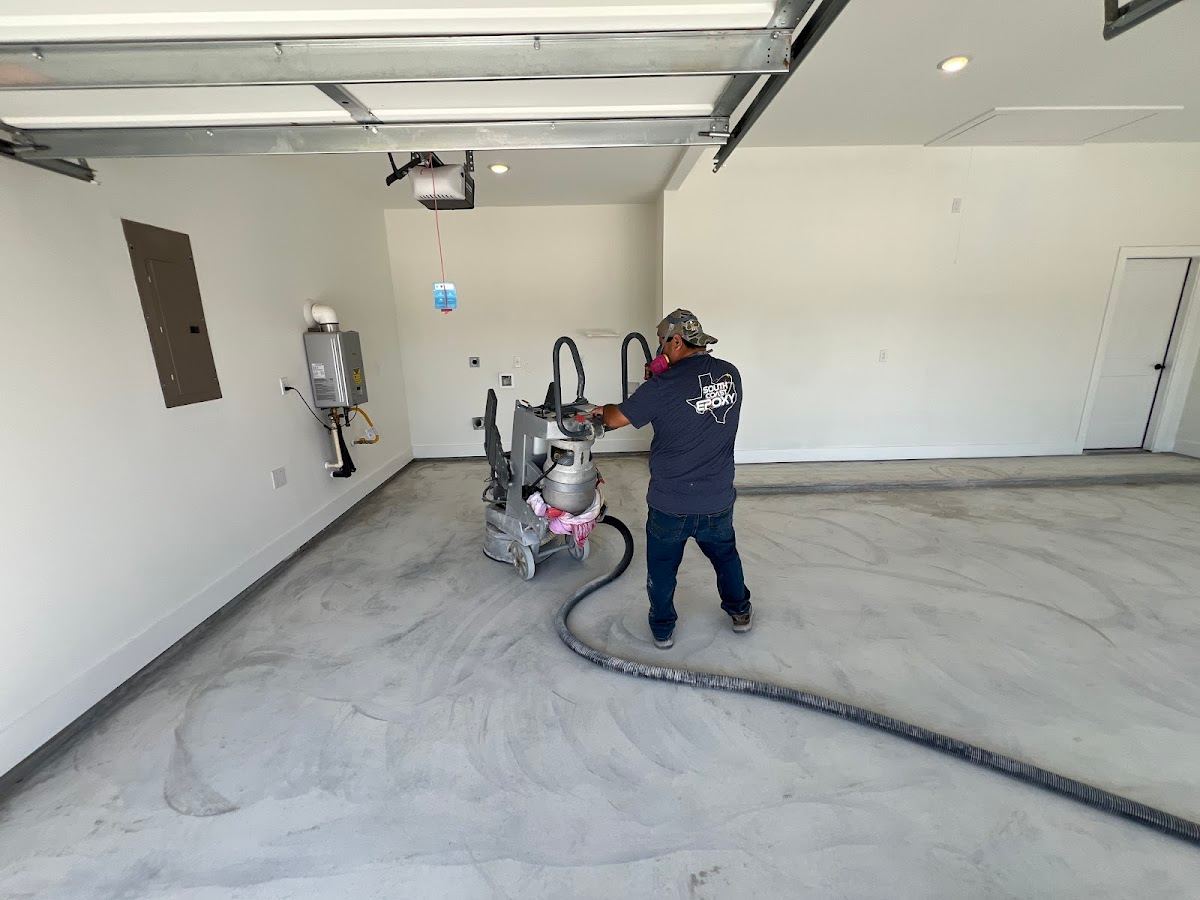
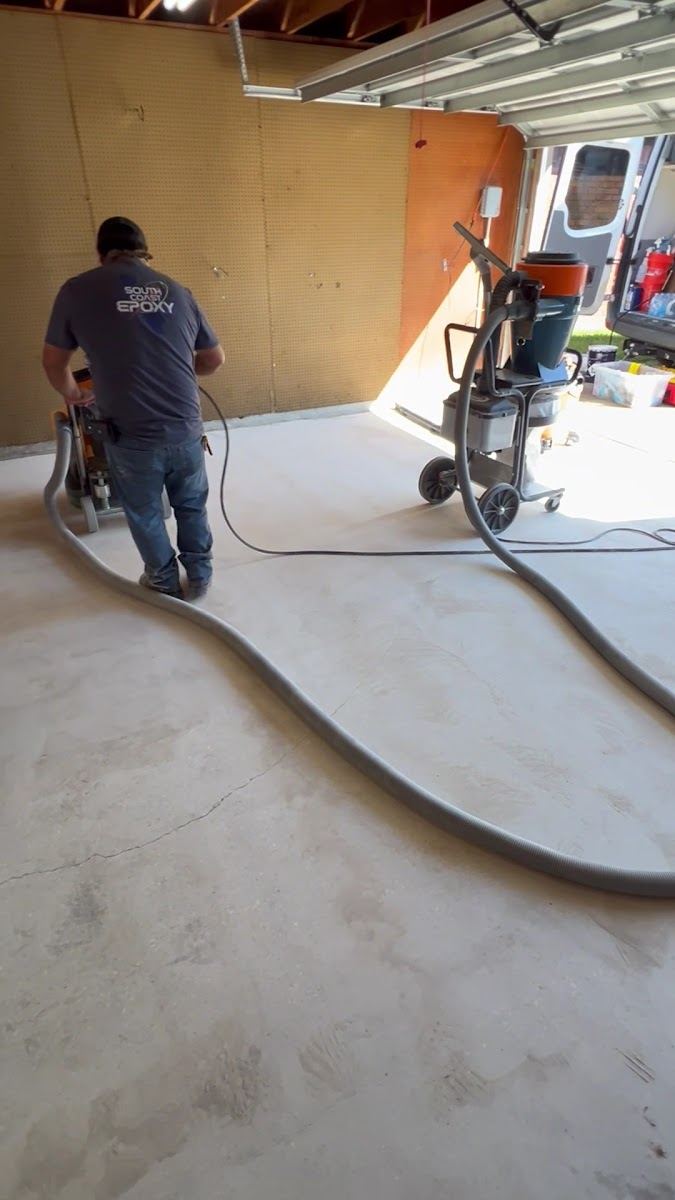
We use walk-behind and ride-on diamond grinders with dust-containment to mechanically abrade the slab. The goal is the right concrete surface profile (CSP) for the system going on top: lighter for thin coatings, more aggressive for high-build and mortar systems. Grinding also removes adhesives, thin-set, paint and failed coatings, and can flatten minor unevenness.
Benefits
- Removes old coatings, paint, glue and thin-set
- Creates the correct CSP for a strong coating bond
- Knocks down high spots and minor trip hazards
- Dust-contained process keeps the site clean
- Prepares slabs for epoxy, polyaspartic or polishing
- Reveals and helps assess slab condition before coating
Best Used For
- Garages prepping for epoxy or polyaspartic
- Commercial floors needing old-coating removal
- Warehouses and shops before high-build systems
- Retail and restaurant remodels removing old adhesives
- Patios and porches prepping for coatings
- Any slab with surface contamination or roughness
Get a free concrete grinding quote
Every coating that peels, bubbles or delaminates on the Gulf Coast traces back to the same root cause: the slab was never prepped right. Concrete grinding is the step that fixes that — mechanically opening, leveling and profiling the concrete so whatever goes on top actually grips. At South Coast Epoxy, owner Andrew treats grinding as the foundation of the whole job, not an afterthought, because in League City and Houston heat and humidity a poorly prepped floor fails fast. Here's exactly what diamond concrete grinding does, why it matters on a slab-on-grade Texas floor, and how we approach it.
What Concrete Grinding Is and How It Works
Concrete grinding is the mechanical abrasion of a concrete surface using rotating heads fitted with industrial diamond segments. As the diamonds spin against the slab, they shave off the top layer — stripping coatings, adhesives and contaminants while simultaneously cutting a microscopic texture into the bare concrete.
That texture has a name: the concrete surface profile (CSP). The International Concrete Repair Institute grades profiles from CSP 1 (nearly smooth) to CSP 9 (very rough). Most coating systems bond best in the CSP 1–3 range — a surface that looks smooth to the eye but has a slight tooth you can feel with your hand. The whole point of grinding is to dial the slab to the right CSP for the system going on top: a thin sealer needs a light profile, while a high-build epoxy, mortar or quartz system needs a more aggressive one. Get this wrong and the coating either can't grip (too smooth) or telegraphs every scratch (too rough).
Grinding is the cornerstone of professional surface preparation, and it's the prep method we use ahead of nearly every coating we install.
Why Grinding Matters — Key Benefits
The single biggest benefit is adhesion. A ground, profiled slab gives epoxy and polyaspartic a mechanical key to lock into, instead of sitting on a sealed or glazed surface where it can lift. Beyond bond, grinding earns its keep in several ways:
- Coating and adhesive removal. Diamonds cut straight through failed epoxy, paint, urethane, carpet glue, thin-set and mastic down to sound concrete.
- Leveling and trip-hazard reduction. Grinding knocks down high spots, ridges and raised trowel marks for a flatter, safer floor.
- Contaminant removal. Oils, sealers, curing compounds and surface laitance — the weak, dusty top skin of poured concrete — all get cut away.
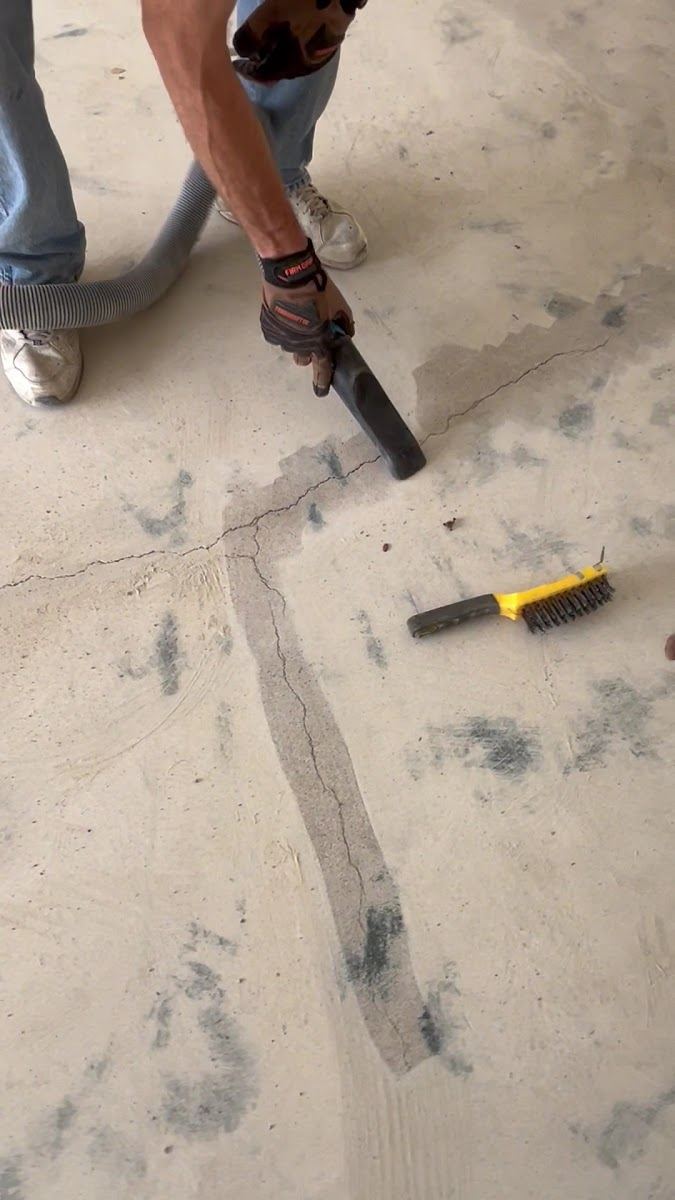
- Honest slab assessment. Once we grind, we can actually see what's underneath: cracks, soft spots, moisture staining and prior repairs that change the plan.
That last point matters. Grinding is also a diagnostic step — it tells us whether a slab is ready to coat or needs repair first. We'd rather find a problem now than warranty a peel later.
Texas and Gulf-Coast Considerations
Coastal Texas is a hard environment for concrete floors, and grinding is where we account for it. Nearly every slab around League City is slab-on-grade, poured directly on soil with no basement between it and the ground. That means ground moisture is constantly trying to push up through the concrete as vapor — what the industry calls moisture vapor emission. If that vapor hits the underside of a coating it can't escape through, you get blisters, whitening and delamination.
Grinding alone doesn't stop moisture, but it's where moisture management starts. Opening the slab lets us run moisture testing and read the concrete honestly before committing to a system. Our expansive clay soils also move with the wet-dry seasons, stressing slabs and reopening cracks, so grinding gives us a clean look at crack and joint condition to repair before coating.
Then there's the heat. Surface temperatures and humidity swing hard here, and any contamination left under a coating becomes a weak point that lets go faster in that thermal stress. A properly ground, clean, profiled slab is your best insurance against Gulf-Coast coating failure — which is exactly why Andrew refuses to skip or rush it. We cover this in depth in our guide to concrete grinding before epoxy.
Grinding Methods, Profiles and Finishes
Not every floor needs the same approach. We match the equipment and aggressiveness to the slab and the goal:
| Goal | Typical approach |
|---|---|
| Prep for thin coating or sealer | Lighter grind, CSP 1–2 |
| Prep for epoxy / polyaspartic | Standard grind, CSP 2–3 |
| Prep for high-build or mortar system | Aggressive grind, CSP 3+ |
| Remove old epoxy, paint or glue | Coarse coating-removal tooling |
| Decorative exposed finish | Progressive diamond polishing grits |
We run walk-behind and ride-on diamond grinders for the field, paired with edge grinders to reach walls, corners and tight spots a big machine can't. Tooling ranges from coarse metal-bond segments for stripping and leveling to finer resin-bond diamonds when a smoother result is needed.
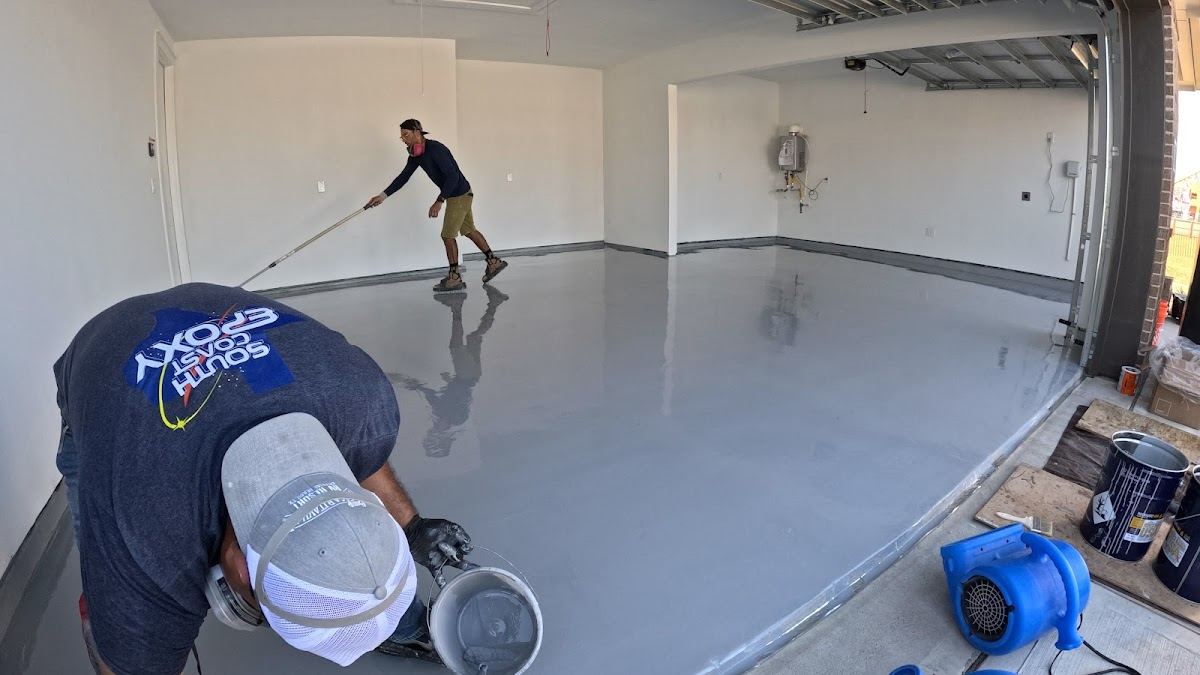
Grinding can also be a finish in its own right. A grind-and-seal floor — ground to a clean, lightly exposed surface and sealed — is a budget-friendly, durable option for garages and shops. Push the grit progression further and you're into mechanical concrete polishing, a true diamond-polished surface with sheen and no coating to peel.
Who Concrete Grinding Is Best For
Grinding shows up on almost every floor we touch, but it's especially critical for:
- Garages prepping for epoxy or garage floor coatings — stripping old DIY paint and profiling for a bond that survives hot tires.
- Warehouses and shops that need old high-build systems removed before re-coating heavy-traffic warehouse flooring.
- Restaurants and retail remodels where decades of tile mastic, thin-set or carpet glue have to come off before new flooring.
- Commercial and industrial buildings removing failed coatings or contamination from machine oil and chemicals.
- Patios and porches that need a cleaned, profiled surface before a decorative coating.
If you're putting epoxy flooring over an existing floor of any kind, grinding is almost certainly part of the job.
Our Concrete Grinding Process
We keep the process disciplined and the same on every site, residential or commercial:
- Assess the slab. We identify coatings, contaminants, high spots, cracks and moisture concerns before a single machine starts.
- Set containment. Dust collection and area protection go up first — our grinding is a dust-contained process that keeps your home or business clean, no clouds of silica everywhere.
- Coarse grind. Coatings, adhesives and high areas come off, leveling the surface and exposing sound concrete.
- Profile to spec. We refine the slab to the exact CSP the chosen system needs — no guessing.
- Clean and inspect. We vacuum thoroughly and verify the surface is contaminant-free and correctly profiled.
- Repair, hand off or coat. We address any cracks or spalls found, then either proceed to your coating or polish, or hand off a prepped slab for another installer.
Because we offer grinding as a standalone service, you can hire us just for the prep — or, more often, let us carry it straight through to the finished floor.
What Drives the Cost
We don't quote prices online because no two slabs are the same, and we won't pretend otherwise. The honest factors that move a grinding price are:
- Square footage. Bigger floors cost more in total but often less per foot.
- What's on the slab now. A bare slab grinds fast; a floor caked in old epoxy, thick mastic or multiple coating layers takes far more tooling and time.
- Slab condition. Heavy cracking, spalling, unevenness or needed leveling adds repair work on top of the grind.
- Target profile. A more aggressive CSP or a decorative polish requires more passes.
- Access and edges. Tight rooms, lots of edge work, fixtures and obstacles slow the job.
After a look at your slab, Andrew gives a clear, fair recommendation — not the priciest upsell. If a simpler prep gets you a lasting floor, that's what we'll tell you. You can read more on vetting installers in our flooring contractor hiring guide.
How Grinding Compares to Other Prep Methods
Grinding isn't the only way to prep concrete, but it's the most versatile. Acid etching — pouring acid to roughen a slab — is unreliable, hard to control and leaves residue that can wreck adhesion; we don't trust it for a floor that needs to last in our climate. Shot blasting is excellent for very large bare industrial slabs but is aggressive and leaves a coarse texture better suited to high-build systems than a smooth decorative finish.
Diamond grinding hits the sweet spot for most League City and Houston floors: it removes coatings, levels the surface and produces a controllable, repeatable profile across garages, commercial spaces and decorative work alike — all with dust contained. If you're weighing a coating against a no-coating finish, our breakdown of epoxy vs. polished concrete is a good next read.
Maintenance and Longevity
Grinding itself is permanent — once a slab is profiled, it stays profiled until something is coated over it. What you do after grinding determines longevity. A grind-and-seal floor needs periodic resealing. A coated floor's lifespan depends almost entirely on the prep underneath it, which is precisely why we obsess over the grind: do this step right and a quality epoxy or polyaspartic floor can last many years of Texas use. Skip it, and even premium materials peel. Good prep is the cheapest insurance a floor can have.
Why Choose South Coast Epoxy
South Coast Epoxy is locally owned and based in League City, and Andrew's whole reputation is built on doing the unglamorous prep step properly — even though it's the part nobody sees once the floor is finished. We bring proper diamond grinding, real crack repair, moisture testing, clean dust-contained prep, clear communication and a final walkthrough to every job. With 57 reviews and a 4.9 rating, our customers know the difference good prep makes.
We serve the entire Houston Bay Area, including League City, Houston, Clear Lake, Friendswood, Kemah, Seabrook, Webster, Pearland, Dickinson and Galveston.
Get a Free Concrete Grinding Quote
Whether you need an old coating stripped, a slab leveled, or a floor profiled for new epoxy, we'll give you an honest assessment and a fair quote. Email South Coast Epoxy at info@southcoastepoxy.com or reach out through our contact page to get started — let's get your slab prepped right the first time.
Recent Concrete Grinding Projects
Our Process
Assess slab
Identify coatings, contaminants and high spots.
Set containment
Dust collection and area protection.
Coarse grind
Remove coatings and adhesives and level high areas.
Profile to spec
Refine to the CSP needed for the chosen system.
Clean & inspect
Vacuum and verify the surface is ready.
Handover or coat
Proceed to coating or polishing, or hand off a prepped slab.
Related Services
Areas We Serve
Related Reading
Concrete Grinding FAQs
Why is grinding necessary before coating?
It removes contaminants and creates a mechanical profile so the coating bonds. Skipping it is the top reason floors peel, especially in Gulf-Coast heat.
Is the process messy?
We use dust-containment systems to keep grinding dust under control on residential and commercial sites.
Can you remove an old epoxy or paint?
Yes. Diamond grinding strips failed coatings, paint, glue and thin-set down to sound concrete.
Can grinding fix an uneven floor?
It can knock down high spots and minor unevenness; significant leveling may require patching or self-leveling, which we will advise on after assessment.
Do you offer grinding as a standalone service?
Yes. We can prep a slab for your own finish or carry it through to a full coating or polish.
Ready to Upgrade Your Floors?
Whether you need a garage epoxy floor, polished concrete, a commercial coating system, a restaurant floor, a warehouse floor, or a custom countertop finish, South Coast Epoxy will help you choose the right surface system for your space.
Prefer email? Reach us at info@southcoastepoxy.com