
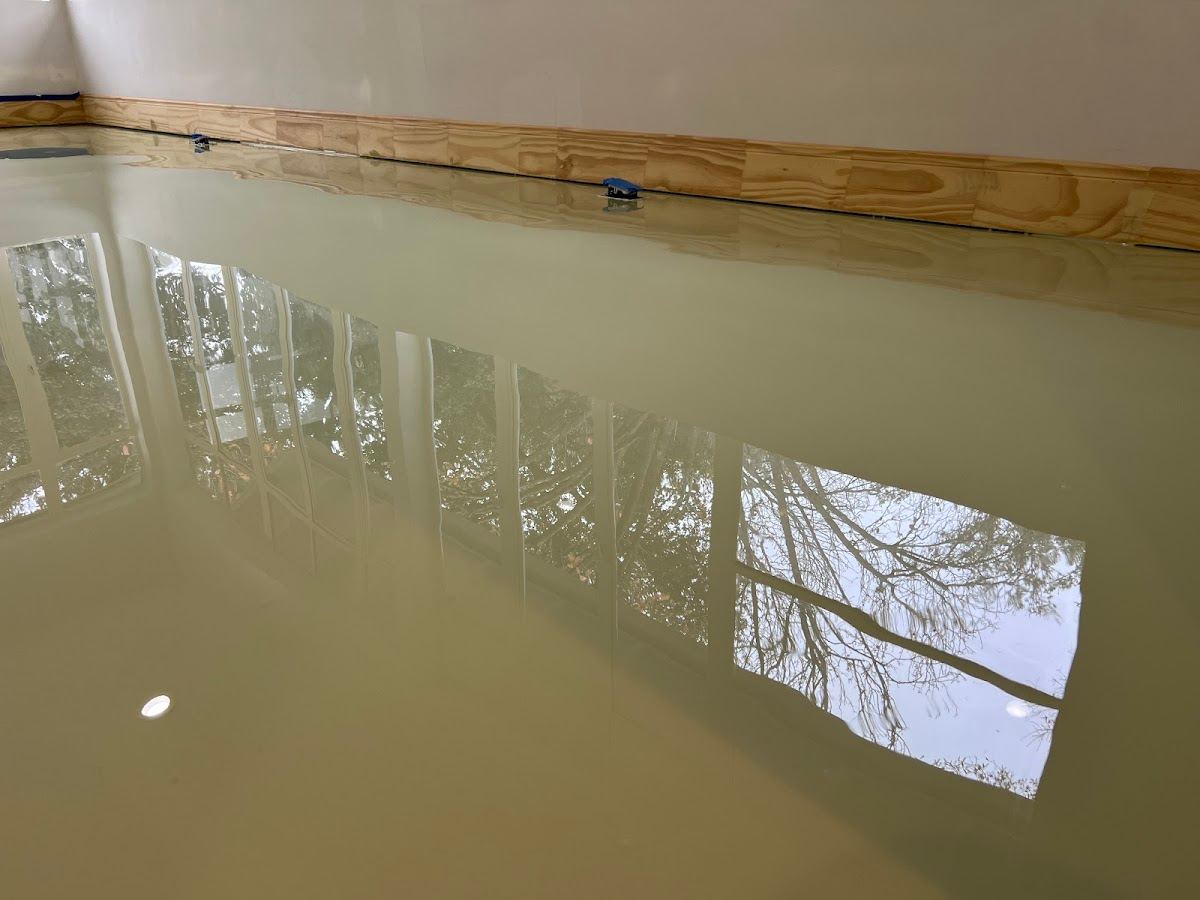
Flooring Service
Epoxy Flooring Contractors in Texas
Seamless, chemical-resistant epoxy floors engineered for Texas heat, humidity and slab foundations.
South Coast Epoxy is a locally owned epoxy flooring contractor in League City, installing high-performance floor coatings throughout Houston, Clear Lake, Friendswood and the Texas Gulf Coast. Andrew and his crew match the right epoxy system to your slab and your space, not the most expensive product on the shelf. Every floor starts with proper concrete preparation so the coating bonds for the long haul in our heat and humidity.
How it works
Epoxy is a two-part resin (resin plus hardener) that cures into a hard, seamless, non-porous surface bonded directly to your concrete. Because Gulf-Coast slabs deal with moisture vapor, we test and prep first, then build the floor in layers: primer, base coat, optional decorative media (flake, metallic or quartz), and a protective topcoat. For high-traffic or fast-turnaround jobs we will often finish with a UV-stable polyaspartic topcoat for added abrasion and hot-tire resistance.
Benefits
- Seamless, non-porous surface that resists stains, chemicals and moisture
- Stands up to Gulf-Coast heat, humidity and hot-tire pickup
- Easy to clean with no grout lines or seams to trap dirt
- Brightens interiors with high-gloss or custom decorative finishes
- Bonds to properly prepped concrete for lasting durability
- Custom colors, flake blends and metallic options to fit any space
Best Used For
- Residential garages and workshops
- Kitchens, patios and front porches
- Restaurants, bars and commercial kitchens
- Warehouses, shops and light-industrial floors
- Gyms and fitness studios
- Medical, clinic and sterile-room floors
Get a free epoxy flooring quote
A good epoxy floor is more than a glossy coat of resin. It is a bonded system that has to survive Gulf-Coast heat, slab moisture, hot tires, and years of foot or forklift traffic without peeling, blistering, or chalking. South Coast Epoxy is a locally owned crew based in League City, and we install epoxy flooring across Texas the way it should be done: slab tested first, concrete ground to a clean profile, then the right system matched to your space, not the priciest product on the shelf.
If you have searched for epoxy floor contractors in Texas and gotten a wall of "best" and "#1" claims, this page is the honest version. Here is exactly how the system works, what it costs to do right, and why so many Texas epoxy jobs fail when prep is skipped.
What Epoxy Flooring Actually Is
Epoxy flooring is a two-part resin system: a resin and a hardener that, once mixed, chemically cure into a hard, seamless, non-porous surface bonded directly to your concrete slab. Unlike paint, which sits on top and wears off, properly installed epoxy becomes part of the floor.
A real epoxy floor is built in layers, not brushed on in a single pass:
- A moisture-aware primer that penetrates the concrete pores and grips the slab.
- A base coat that builds thickness and color.
- Optional decorative media broadcast into the base: vinyl flake, metallic pigment, or quartz aggregate.
- A protective topcoat for abrasion, UV, and chemical resistance.
For high-traffic floors and fast turnarounds, we often finish with a UV-stable polyaspartic topcoat. Polyaspartic cures faster, resists hot-tire pickup and yellowing better than standard epoxy, and lets us return a garage or shop to service in a fraction of the time. The right combination depends on your slab and your use case, which is what the on-site assessment is for. This aligns with our broader concrete coatings approach.
The Benefits That Matter in Texas
A seamless, non-porous epoxy surface does not have grout lines or seams to trap dirt, oil, or bacteria, so it cleans up with a mop and resists stains and most chemicals. That same density is why epoxy stands up to dropped tools, dragged equipment, and the constant hot-tire contact a Texas garage sees in summer.
Beyond durability, epoxy brightens a space. A high-gloss topcoat bounces light around a dim garage or warehouse, and decorative systems let you dial in custom colors, flake blends, or a flowing metallic look. But the benefit that actually decides whether your floor lasts is bond strength, and bond strength is earned at the prep stage, never sprayed on at the end.
Texas and Gulf-Coast Considerations
This is where most epoxy jobs in our region succeed or fail. Coastal Texas combines high humidity, expansive clay soils, and slab-on-grade construction, and all three work against a coating.
- Moisture vapor emission. Our clay soils hold water after rain and release it upward through the slab as vapor. That vapor pressure pushes against the underside of any coating. Lay epoxy over a slab that is giving off too much moisture and it will eventually blister, bubble, or delaminate, no matter how good the product is.
- Slab-on-grade movement. Many Bay Area homes and buildings sit on slab-on-grade foundations that shift seasonally as soils swell and shrink. That movement is why crack and control-joint treatment is part of the job, not an afterthought.
- Heat and humidity during install. Both affect cure. We schedule and product-select around real conditions instead of forcing a coating down in the wrong window.
Our answer is simple and non-negotiable: moisture testing before we coat. When a slab reads high, we use a moisture-mitigating primer to manage vapor before the build coats go down. Skipping this step is the single most common reason Texas epoxy floors fail, and it is why we never do. We walk through this in more detail in our guide on concrete grinding before epoxy.
The Systems and Finishes You Can Choose
Epoxy is not one product. The finish you pick changes the look, the slip resistance, and the price.
| System | Best For | Why |
|---|---|---|
| Solid color | Clean, budget-minded garages and shops | Simple, bright, easy to maintain |
| Flake epoxy | Garages, gyms, mudrooms | Full broadcast flake hides imperfections and adds grip |
| Metallic epoxy | Showrooms, retail, statement garages | Flowing, marbled, high-end look |
| Quartz epoxy | Restaurants, medical, wet areas | Aggregate adds slip resistance and toughness |
A full-flake broadcast (flake spread to refusal, then scraped and topcoated) gives a near-seamless terrazzo look and the best slip texture for a residential garage. Quartz systems trowel in graded sand for the heavy-duty, slip-resistant surface that commercial kitchens and sterile rooms need. Not sure which fits? Our post on flake epoxy floor benefits breaks down the decorative options.
Who and What Epoxy Flooring Is Best For
Because we tailor the system, epoxy works across a wide range of Texas spaces:
- Residential garages and workshops — flake or polyaspartic systems that shrug off hot tires, oil, and dropped tools. See our dedicated garage epoxy flooring service.
- Restaurants, bars, and commercial kitchens — seamless, sanitary quartz floors that pass inspection and clean fast.
- Warehouses and light-industrial shops — high-build systems that take forklift and pallet-jack traffic, covered under our commercial epoxy flooring work.
- Medical, clinic, and pharmacy sterile rooms — non-porous, chemical-resistant surfaces with no seams to harbor contaminants.
- Gyms and fitness studios — durable, cushioned-feel coatings that handle dropped weights and heavy foot traffic.
- Retail floors and showrooms — decorative metallic and flake finishes that look as good as the product on display.
- Patios and porches — UV-stable, slip-textured finishes that hold up to sun and the occasional Gulf storm.
If your floor takes serious abuse, our industrial epoxy flooring systems go thicker and tougher.
How We Install Your Floor
The process is the product. Skip a step and the floor tells on you within a year.
- On-site assessment. Andrew evaluates your slab, moisture, existing coatings, cracks, and goals, then recommends a system that actually fits.
- Surface preparation. We diamond grind (or shot-blast) the concrete to the correct CSP profile so the resin has clean, open pores to bite into. This is the foundation of the whole job and where shortcuts cause failures. Learn more about our surface preparation and concrete grinding.
- Crack and joint repair. We fill cracks, spalls, and pitting and treat control joints so the finished floor is sound and seamless.
- Prime and base coat. A moisture-aware primer locks to the slab, followed by the base resin.
- Decorative and build coats. Flake, metallic, or quartz media broadcast as selected.
- Protective topcoat. Epoxy or polyaspartic for abrasion, UV, and chemical resistance.
- Cure and walkthrough. We confirm foot-traffic and vehicle-ready timelines, review care, and do a final walkthrough before handover.
Honest Cost Factors
We will not put a fake "$X per square foot" number on this page, because anyone who quotes you a floor without seeing your slab is guessing. What actually drives the price of an epoxy floor:
- Square footage. Larger areas lower the per-foot cost but raise the total.
- Slab and prep condition. A clean, sound slab grinds quickly. Old coatings, heavy oil contamination, severe cracking, or spalling add prep labor.
- System chosen. Solid color costs less than a full-flake, metallic, or quartz build with a polyaspartic topcoat.
- Repairs and moisture mitigation. Crack repair, floor repair and maintenance, and moisture-mitigating primer for a high-reading slab add cost but protect your investment.
A fair quote comes after we see the floor. That is the honest way to price it, and it is the only way the number means anything.
How Epoxy Compares to the Alternatives
Epoxy is not always the right call, and we will tell you when it is not. Polished concrete grinds and densifies your existing slab into a low-maintenance, breathable surface that handles moisture vapor well, which can make it the smarter pick for large warehouses or showrooms. We cover both, including concrete polishing, and our guide on epoxy flooring vs. polished concrete lays out the trade-offs.
Compared to tile, epoxy has no grout lines to crack or stain. Compared to floor paint, it is in a different universe of durability. The honest summary: epoxy wins for chemical resistance, custom looks, and sealed protection; polished concrete wins for breathability and bare-slab simplicity. We help you pick based on your slab, not our margin.
Maintenance and Longevity
A properly installed epoxy floor can last many years in both homes and businesses. Longevity comes down to three things: prep quality, the right system for the traffic, and the topcoat. Maintenance is genuinely easy — sweep or dust-mop regularly, clean spills, and damp-mop with a pH-neutral cleaner. Avoid harsh abrasives and drag-don't-grind heavy objects. A UV-stable polyaspartic topcoat helps high-sun garages and patios resist yellowing. For the full rundown, see our posts on how long epoxy flooring lasts and maintaining an epoxy garage floor.
Why Choose South Coast Epoxy
We are Andrew and a local crew, not a national franchise reading from a script. We know Gulf-Coast slabs because we live and work on them, from League City and Clear Lake to Friendswood, Pearland, and across Houston. We test before we coat, we grind instead of cutting corners, we communicate clearly, we price fairly, and we recommend the system that is right for your floor even when it is not the most expensive one. Clean prep, real moisture know-how, and a final walkthrough on every job.
Ready for a floor built to last in Texas heat and humidity? Request a free quote or email South Coast Epoxy at info@southcoastepoxy.com. Tell us about your slab and your space, and Andrew will recommend the right epoxy system and send photos of completed jobs in the finish you are considering.
Recent Epoxy Flooring Projects
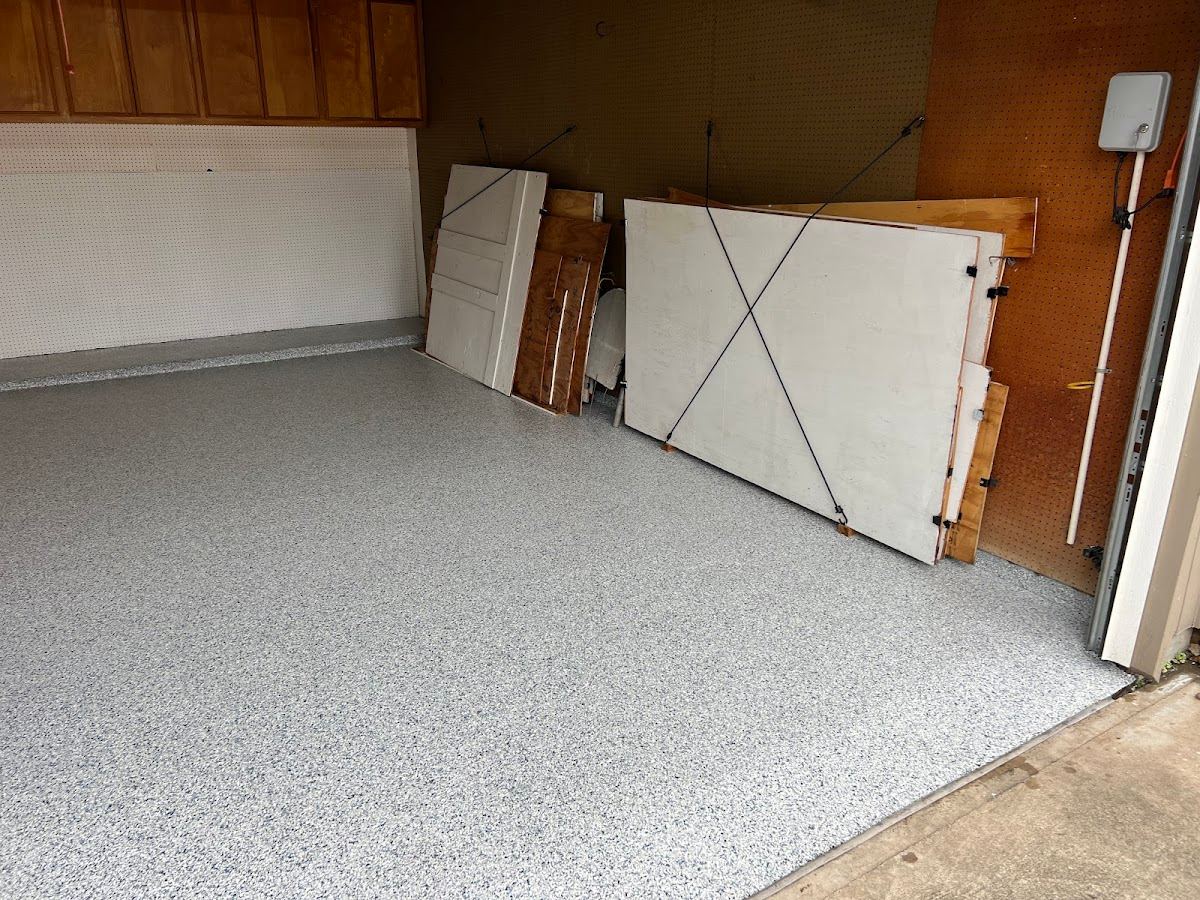
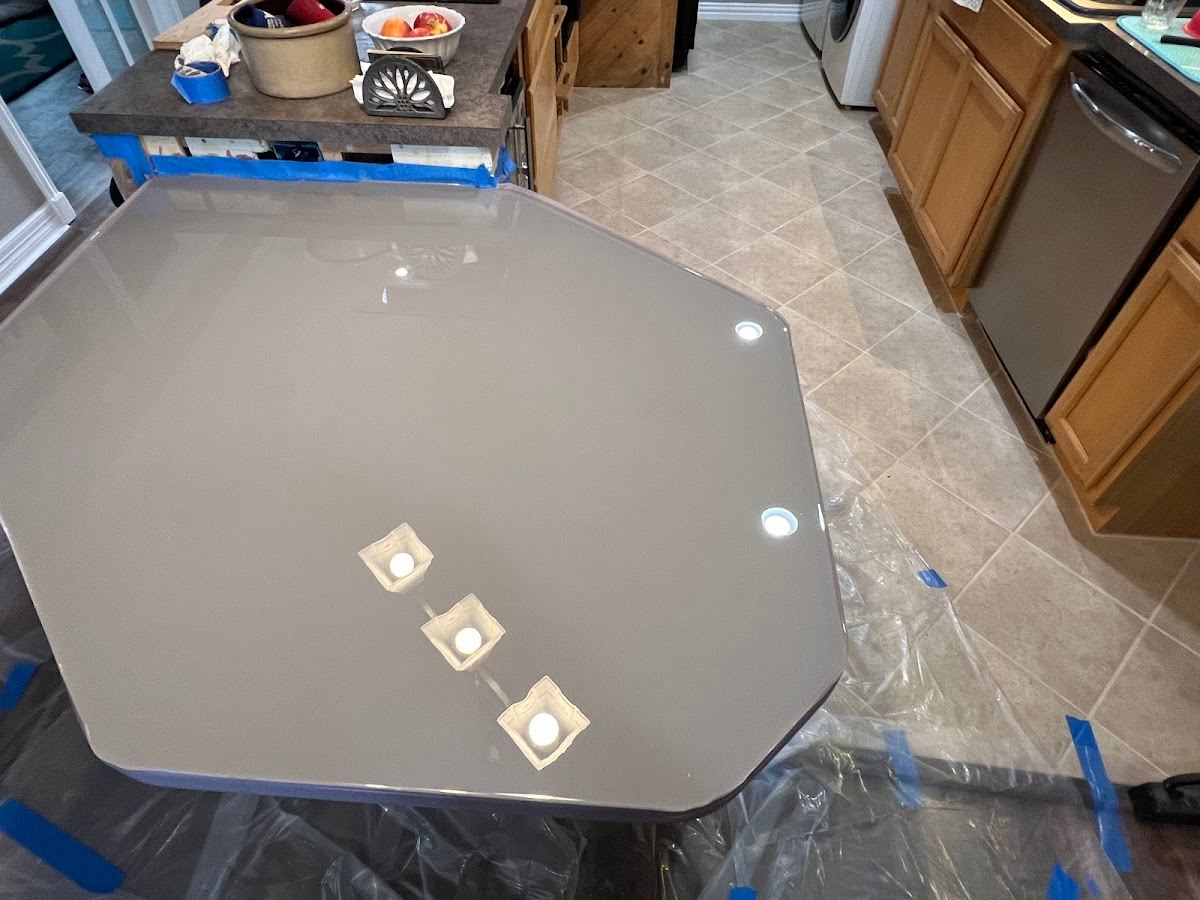
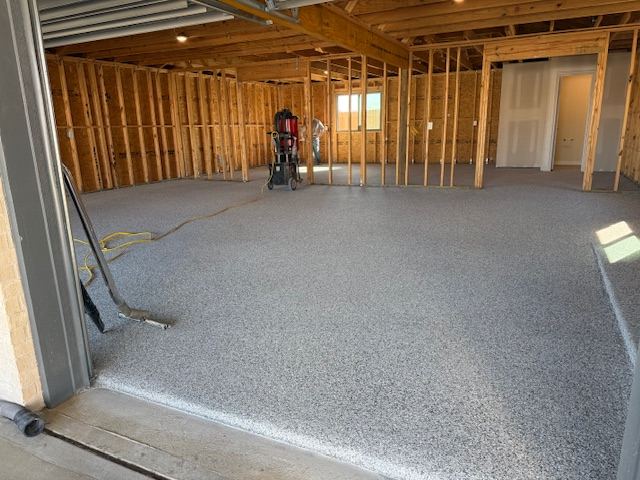
Our Process
On-site assessment
Andrew evaluates your slab, moisture, repairs and goals, then recommends a system.
Surface prep
Diamond grind or shot-blast to the right profile, then repair cracks and spalls.
Prime & base coat
Moisture-aware primer plus base resin for a strong, lasting bond.
Decorative & build coats
Flake, metallic or quartz media as selected.
Protective topcoat
Epoxy or polyaspartic topcoat for abrasion, UV and chemical resistance.
Cure & walkthrough
We review care instructions and confirm cure times before handover.
Related Services
Areas We Serve
Related Reading
Epoxy Flooring FAQs
How long does an epoxy floor last?
With proper surface prep and the right system, an epoxy floor can last many years in residential and commercial settings. Longevity depends on traffic, prep quality and topcoat, which is why we never skip preparation.
Is epoxy good for the humid Gulf-Coast climate?
Yes, when the slab is tested and prepped for moisture. We address moisture vapor before coating so the floor bonds and performs through our heat and humidity.
Can you epoxy over an existing floor?
In most cases we mechanically grind the existing concrete to a clean profile first. We assess older coatings and damage during the on-site visit to recommend the best approach.
How long before I can use the floor?
Cure times vary by system and temperature; we provide specific foot-traffic and vehicle timelines for your project at handover.
Do you offer color and finish options?
Yes, including solid colors, decorative flake blends, metallic and quartz systems. Andrew can send photos of completed jobs in the colors you are considering.
Ready to Upgrade Your Floors?
Whether you need a garage epoxy floor, polished concrete, a commercial coating system, a restaurant floor, a warehouse floor, or a custom countertop finish, South Coast Epoxy will help you choose the right surface system for your space.
Prefer email? Reach us at info@southcoastepoxy.com