
Flooring Service
Concrete Polishing Contractors in League City & Houston, TX
Low-maintenance polished concrete with a natural, high-end sheen.
Polished concrete is a favorite for Houston and League City spaces that want a clean, modern look without a coating to peel. South Coast Epoxy mechanically polishes existing slabs to a refined sheen for homes, retail and commercial floors across the Bay Area. Andrew will tell you honestly whether your slab is a good candidate before you commit.
How it works
Polished concrete is created mechanically. We grind the slab with progressively finer diamond abrasives, apply a chemical densifier to harden the surface, then refine to the desired gloss level (matte, satin or high-gloss). Unlike a coating, the finish is the concrete itself, so there is nothing to delaminate. A penetrating sealer adds stain resistance.
Benefits
- No coating to peel, chip or delaminate
- Low-maintenance with sweeping and damp-mopping
- Densified surface resists dusting and abrasion
- Reflective finish improves interior lighting
- Choose your gloss level from matte to high-gloss
- Cost-effective use of an existing slab
Best Used For
- Retail floors and showrooms
- Restaurants, cafes and breweries
- Warehouses and back-of-house
- Modern residential interiors and kitchens
- Offices and lobbies
- Gyms and studios
Get a free concrete polishing quote
If you want a clean, modern floor that holds up to Gulf-Coast heat and humidity without a coating that can someday peel, polished concrete is hard to beat. South Coast Epoxy mechanically refines the slab you already own into a hard, low-maintenance, light-reflecting surface for homes, shops, and commercial spaces across the Houston Bay Area. Owner Andrew will look at your slab first and tell you honestly whether polishing is the right call before you spend a dollar.
What Polished Concrete Actually Is
Polished concrete is not a coating, a paint, or a topping. It is the original concrete slab itself, ground and refined with progressively finer diamond abrasives until the surface becomes dense, smooth, and reflective. There is no resin layer sitting on top, so there is nothing to delaminate, chip, or peel over time.
The work runs through two linked processes. First we mechanically grind the slab, stepping through coarse-to-fine diamond tooling. Somewhere in that sequence we apply a chemical densifier (a lithium or sodium silicate hardener) that reacts with the concrete to fill pores and harden the surface. We keep refining with finer grits until we hit the gloss level you want, then add a penetrating sealer for stain resistance. Because the finish is the concrete, a polished floor done right can outlast almost any coated alternative.
This is mechanical, true polished concrete, not a topical "polish look" guard coat. The difference matters for longevity, and it is one of the first things Andrew explains during a free consultation.
The Benefits That Matter on the Gulf Coast
The biggest draw is durability with almost no upkeep. A densified, sealed slab resists the dusting and abrasion that bare concrete suffers, sheds spills when sealed, and cleans up with routine sweeping and damp-mopping. There is no annual recoat cycle and no coating to fail.
It is also one of the most cost-effective floors available, because you are upgrading a slab you already paid for rather than installing a new system over it. The reflective finish bounces interior light around, which can cut lighting needs in warehouses, retail floors, and showrooms. And you control the look: from a soft matte to a mirror-like high-gloss, with cream, salt-and-pepper, or full-aggregate exposure depending on how much you grind into the surface.
Texas and Gulf-Coast Considerations
This is where local know-how earns its keep. Slab-on-grade construction is the norm across League City and Houston, and those slabs sit directly on damp Gulf-Coast soil. That means moisture vapor is always trying to move up through the concrete.
For a coating, high moisture vapor emission can cause bubbling and adhesion failure. Polished concrete has a real advantage here: because it is a breathable, penetrating system rather than a sealed film, it tolerates moisture vapor far better than most epoxy coatings. That is one reason polishing is often the smarter pick for a slab with elevated moisture readings. We still test, because heavy moisture can affect densifier performance and sealer choice, and we want to set honest expectations before we start.
Heat and humidity also affect slab movement and existing cracking. Older Bay Area slabs flex with the seasons, so we evaluate cracks and control joints up front, repair what needs repairing, and tell you straight if a slab is too soft, too damaged, or too contaminated to polish well. Honesty there saves you from a finish that disappoints. If a slab is not a good polishing candidate, we will say so and point you toward concrete coatings or another system instead.
Finish Options and Gloss Levels
Polished concrete is highly customizable, which is why two finished floors can look completely different. The main variables are aggregate exposure and gloss.
| Variable | Options | Look |
|---|---|---|
| Aggregate exposure | Cream / salt-and-pepper / full aggregate | From smooth cement finish to a terrazzo-like stone look |
| Gloss level | Matte / satin / semi-gloss / high-gloss | From low-sheen modern to mirror reflection |
| Color | Natural gray or stained | Neutral industrial, or custom tones via concrete staining |
Gloss is built by how far we carry the diamond sequence. Concrete is generally not considered polished below 400 grit, and high-gloss floors are typically refined out to 800, 1500, or 3000 grit. More grit steps mean more time on the floor and a higher level of clarity and shine. We help you match the gloss to the room: a satin finish hides minor imperfections and handles traffic well, while high-gloss showcases a clean, high-end slab. Color can be added with staining and sealing before the final sealer if you want more than natural gray.
Who Polished Concrete Is Best For
Polished concrete is a workhorse, but it shines in specific spaces:
- Retail floors and showrooms that want a bright, upscale, low-maintenance surface. See our retail flooring work for ideas.
- Restaurants, cafes, and breweries chasing a modern industrial look in the front of house.
- Warehouses and back-of-house that benefit from a hard, light-reflective, forklift-tolerant floor. Compare with our warehouse flooring options.
- Offices, lobbies, and gyms where appearance and easy cleaning both matter.
- Modern residential interiors and kitchens that want a seamless, contemporary slab.
For garages and many home applications where you want chemical resistance and a specific color or flake pattern, a coating system is often the better fit. We will talk you through both honestly rather than push the priciest option.
How We Install It
Every polished floor follows a disciplined sequence. Cutting corners on prep is the fastest way to a blotchy, uneven finish, so Andrew's crew does not skip steps.
- Slab evaluation. We check hardness, cracks, control joints, and any existing coatings to confirm the slab is a good candidate.
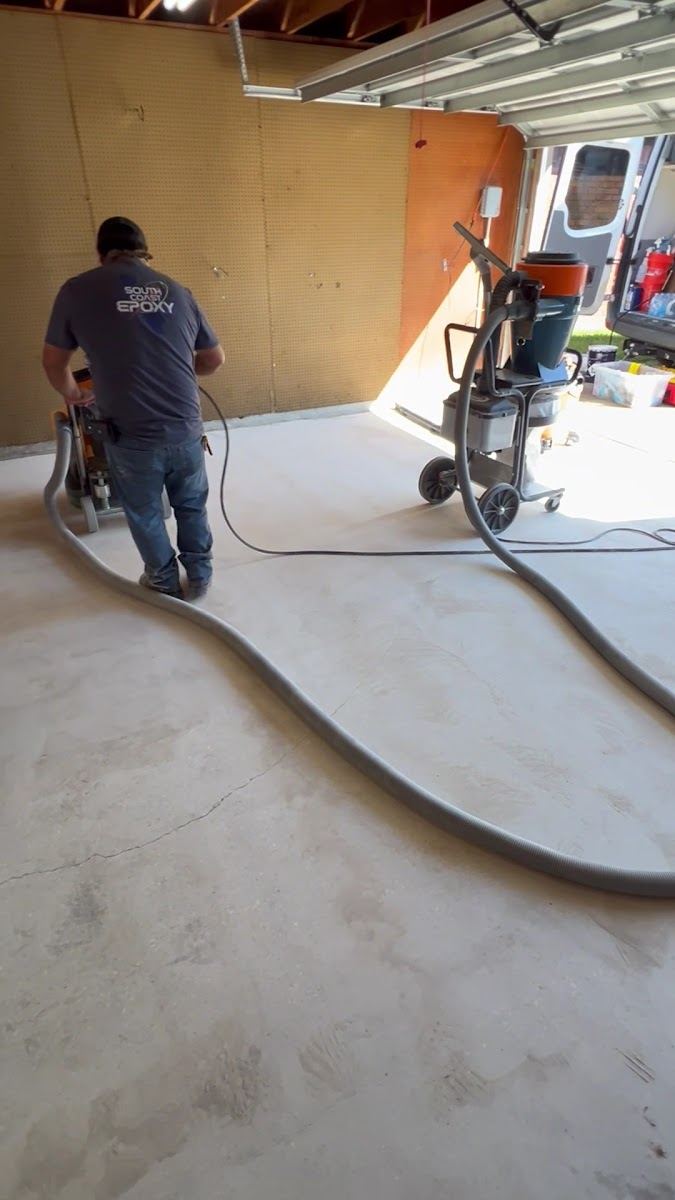
- Coarse grind. We open the surface with aggressive diamonds, removing blemishes and old residue. This is the same diamond work behind our concrete grinding and surface preparation services.
- Crack and joint repair. We fill cracks and joints so they do not telegraph through the finish.
- Densify. We apply a chemical hardener to strengthen the surface and reduce dusting.
- Progressive polish. We step through finer diamond grits to reach your target gloss.
- Seal. A penetrating sealer adds stain resistance without a topical film.
- Final buff and walkthrough. We confirm the sheen, hand you a simple care plan, and make sure you are happy before we leave.
For a deeper comparison of the two main routes, read our guide on epoxy flooring vs. polished concrete and our overview of polished concrete for commercial spaces in Texas.
Honest Cost Factors (No Made-Up Numbers)
We will not quote a price online, because no honest contractor can price your floor without seeing it. What we can do is explain what actually moves the number so there are no surprises:
- Square footage. Larger floors benefit from economies of scale; small rooms cost more per foot because of setup time.
- Slab and prep condition. Existing coatings, adhesives, stains, or soft concrete add grinding time.
- Repairs. Cracks, spalling, and joint fills add labor before polishing can begin.
- Gloss and exposure level. More grit steps and aggregate exposure mean more passes and more time.
- Color and staining. Optional staining adds material and steps.
- Site conditions. Moisture readings, access, and how much we need to protect surrounding areas.
The honest takeaway: a clean, sound slab and a simpler finish cost less than a damaged slab and a high-gloss, full-aggregate look. We give you a clear written quote after we evaluate the slab.
Polished Concrete vs. Epoxy and Coatings
Both are excellent floors; they are simply built for different priorities. Polishing refines the concrete itself, so there is no coating to peel and it breathes well over a damp slab. A coating such as epoxy flooring or a fast-curing polyaspartic adds a resin layer that delivers seamless chemical resistance, custom color, and full-flake or metallic finishes that polishing cannot match.
If you want the natural concrete look, the lowest long-term maintenance, and a system that handles moisture vapor gracefully, polishing usually wins. If you need a specific color, decorative flake, or maximum chemical and abrasion resistance for a garage or shop, a coating usually wins. We help you decide based on your space and budget, not on which job pays us more.
Maintenance and Longevity
This is the easy part. Polished concrete needs routine sweeping or dust-mopping to keep grit off the surface, and damp-mopping with a neutral-pH cleaner. Avoid harsh acidic or alkaline cleaners that can dull the finish. Depending on traffic, the penetrating sealer may need periodic reapplication, and high-traffic commercial floors can be re-buffed to restore shine.
Because there is no film to delaminate, a properly polished and maintained slab can stay looking good for many years, which is a big part of why it is so popular for high-traffic commercial floors.
Why Choose South Coast Epoxy
South Coast Epoxy is locally owned in League City, and Andrew runs every job with the same priorities: proper diamond prep, real crack repair, moisture awareness, clear communication, and a final walkthrough so you know exactly what you are getting. We earned our 4.9 rating across 57 reviews by giving honest recommendations, not the priciest upsell.
We polish concrete throughout the Bay Area, including League City, Houston, Clear Lake, and Friendswood, along with the surrounding communities. If you are nearby and not sure whether your slab is a good candidate, just ask, we will tell you the truth.
Get a Free Quote
Ready to see what your slab can become? Email South Coast Epoxy at info@southcoastepoxy.com or request your free quote. Send a few photos of your floor and the square footage, and Andrew will follow up with honest guidance and a clear estimate for polished concrete in League City, Houston, and the surrounding Bay Area.
Recent Concrete Polishing Projects
Our Process
Slab evaluation
Check hardness, cracks and existing coatings for suitability.
Coarse grind
Remove blemishes and open the surface.
Densify
Apply hardener to strengthen and reduce dusting.
Progressive polish
Step through finer diamond grits to target gloss.
Seal
Penetrating sealer for stain resistance.
Final buff & walkthrough
Confirm sheen and care plan.
Related Services
Areas We Serve
Related Reading
Concrete Polishing FAQs
Is my slab a good candidate for polishing?
Not every slab is. We evaluate hardness, cracks and any existing coatings first and give you an honest recommendation.
How is polished concrete different from an epoxy floor?
Polishing refines the concrete itself with diamonds and densifier, so there is no coating to peel; epoxy adds a resin layer on top. We help you pick based on your space and budget.
How much maintenance does it need?
Very little. Routine sweeping and damp-mopping, with periodic re-sealing depending on traffic.
Can you add color?
Yes, concrete can be stained before sealing for color; ask about staining options during your consult.
Will it be slippery?
Polished concrete has good traction when dry; we can adjust the finish and add anti-slip treatment for wet-prone areas.
Ready to Upgrade Your Floors?
Whether you need a garage epoxy floor, polished concrete, a commercial coating system, a restaurant floor, a warehouse floor, or a custom countertop finish, South Coast Epoxy will help you choose the right surface system for your space.
Prefer email? Reach us at info@southcoastepoxy.com