
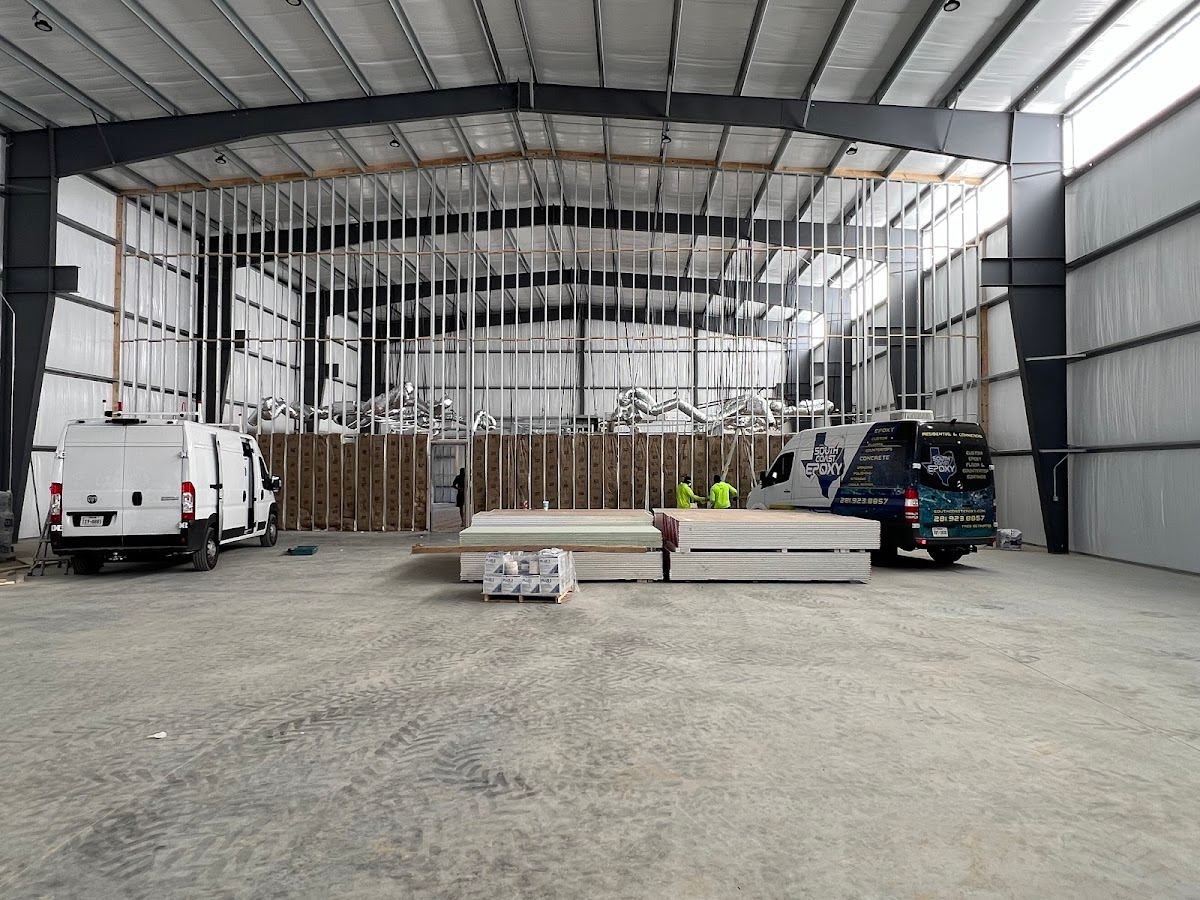
If you run a warehouse or distribution center anywhere along the Texas Gulf Coast, the slab under your racking is one of the hardest-working assets in the building, and one of the easiest to get wrong. It carries loaded forklifts, eats dropped pallets, drinks up battery acid and hydraulic fluid, and bakes under a steel roof in 95-degree summer humidity. The best warehouse flooring in Texas is not a single product. It is the right system matched to how each zone of your facility actually gets used, installed over a slab that was properly prepped and moisture-tested for our climate.
This guide breaks down the commercial warehouse floor coatings that genuinely hold up here, where each one earns its keep, what really drives the price, and how a good crew keeps your operation running while the floor goes down.
What a Texas Warehouse Floor Actually Has to Survive
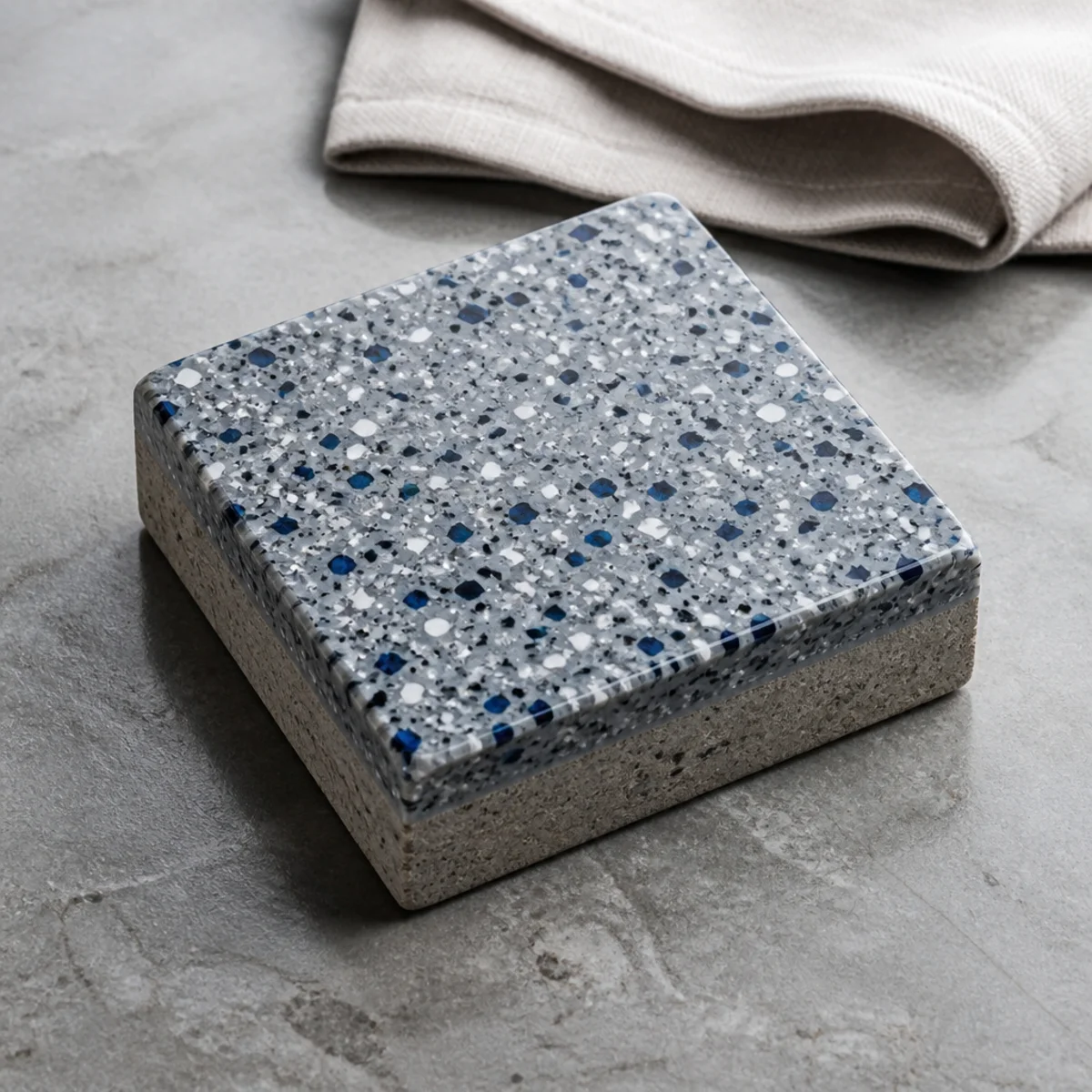
Before you compare products, be honest about the punishment. A warehouse slab gets hit from several directions at once, and the failure mode is almost always the same: the cheap floor cracks, dusts, and peels, then becomes a maintenance line item you never stop paying.
- Point loads and forklift traffic. Hard polyurethane forklift wheels and loaded pallet jacks concentrate thousands of pounds onto tiny contact patches. A coating that is too thin or poorly bonded chips and delaminates right at those spots.
- Abrasion. Grit dragged across the floor acts like sandpaper, wearing down weak coatings and grinding bare concrete into airborne dust that settles on your inventory and your air handlers.
- Impact. Dropped tools, falling product, and pallet corners take chunks out of unprotected concrete.
- Chemicals and thermal shock. Battery acid in charging rooms, degreasers, food acids, hot wash-down water, and freezer-to-dock temperature swings all attack standard concrete and budget coatings.
- Gulf Coast moisture and heat. Slab-on-grade construction means ground vapor is constantly migrating up through your concrete. Pair that with the temperature swings under an uninsulated metal roof and you have a recipe for blistering and delamination unless the system was specified for these conditions.
A floor that answers all of this at once is rarely one product across the whole building. That is the single biggest thing the best-ranking national pages gloss over and the thing that matters most on a real Texas slab.
The Top Commercial Warehouse Floor Coatings, Compared
There is no universally "best" warehouse floor. Each system has a sweet spot. Here is how the realistic options stack up.
| System | Best for | Forklift traffic | Chemical / thermal | Downtime to install |
|---|---|---|---|---|
| High-build epoxy | Heavy-duty and chemical zones | Excellent | Very good | Moderate (multi-day cure) |
| Polyaspartic / polyurea | Fast turnaround, dock areas, UV exposure | Excellent | Good | Low (often 24 hrs) |
| Urethane (cementitious) mortar | Wash bays, food/beverage, freezers, thermal shock | Excellent | Excellent | Moderate |
| Polished concrete | Large storage and racking, dust control | Good–very good | Fair | Low (no coating to cure) |
| ESD / static-control coating | Electronics, battery, flammables storage | Excellent | Very good | Moderate |
High-Build Epoxy
High-build epoxy is the workhorse. Applied thick in multiple coats, it forms a tough, seamless, non-porous surface that shrugs off impact and abrasion and resists most warehouse chemicals. Because it is seamless it cleans easily and traps no product or bacteria, which matters in food, beverage, and medical storage. It also takes line striping cleanly, so forklift lanes and pedestrian zones go right into the floor. For the worst-punished areas, our industrial epoxy coatings are built up for maximum film thickness exactly where the abuse concentrates.
Polyaspartic and Polyurea
Polyaspartic is the answer when downtime is the enemy. These coatings cure fast, often back to foot traffic the same day and forklift traffic in roughly 24 hours, so you can coat a zone over a weekend instead of losing a week. They are also UV-stable, which makes them ideal near loading docks and roll-up doors where sunlight would chalk and yellow a standard epoxy topcoat. We frequently use polyaspartic as the wear coat over an epoxy base, getting a thick, tough build with a fast-curing, sun-resistant finish on top.
Urethane (Cementitious) Mortar
This is the heavy hitter most homeowner-focused articles never mention, and it is critical in Texas food, beverage, and cold-storage warehouses. Urethane mortar systems handle thermal shock, hot wash-downs, and aggressive food acids that would soften a standard epoxy. If you have a wash bay, a freezer, or a processing line with steam and hot water, this is the system that survives. It is also the right call where forklifts run constantly across a wet floor.
Polished Concrete
If you have tens of thousands of square feet under racking, polished concrete is often the most cost-effective surface you can put down. Instead of adding a coating, we mechanically grind and densify the existing slab into a hard, dense, low-dust floor that reflects light beautifully. It never delaminates because there is no film to peel, and it maintains with routine cleaning. For main storage aisles and large open areas, it is hard to beat on lifecycle cost. If you are weighing the two head-to-head, our breakdown of epoxy flooring vs polished concrete walks through the tradeoffs in detail.
ESD and Static-Control Floors
Electronics assembly, battery rooms, and flammable-storage areas need a floor that dissipates static rather than letting it build up. Static-control epoxy systems are formulated to bleed charge safely to ground. If your operation has sensitive components or ignition risk, this is a spec requirement, not a luxury.
Why Combination Systems Win in Real Warehouses
Most large warehouses are not one floor, they are several zones with different demands, and the smart budget spends money where it matters instead of overbuilding everything. A typical Gulf Coast facility might run:
- Polished concrete in the big storage and racking aisles
- High-build epoxy in maintenance bays and general work areas
- Urethane mortar in wash bays, charging rooms, and any wet or hot zone
- UV-stable polyaspartic near docks and roll-up doors
- ESD coating in battery or electronics areas
This zoned approach is exactly how our commercial floor coatings and dedicated warehouse flooring systems are designed to be mixed. You avoid paying premium-coating prices for low-traffic corners while still armoring the spots that take the most abuse.
Safety, Striping, and Compliance
A warehouse floor is also a safety system, and a good one pays for itself in fewer incidents and smoother audits.
- Anti-slip texture. We broadcast aggregate into the topcoat to add traction in walkways, wash areas, and anywhere water or product collects, tuned to be safe without being hard to clean.
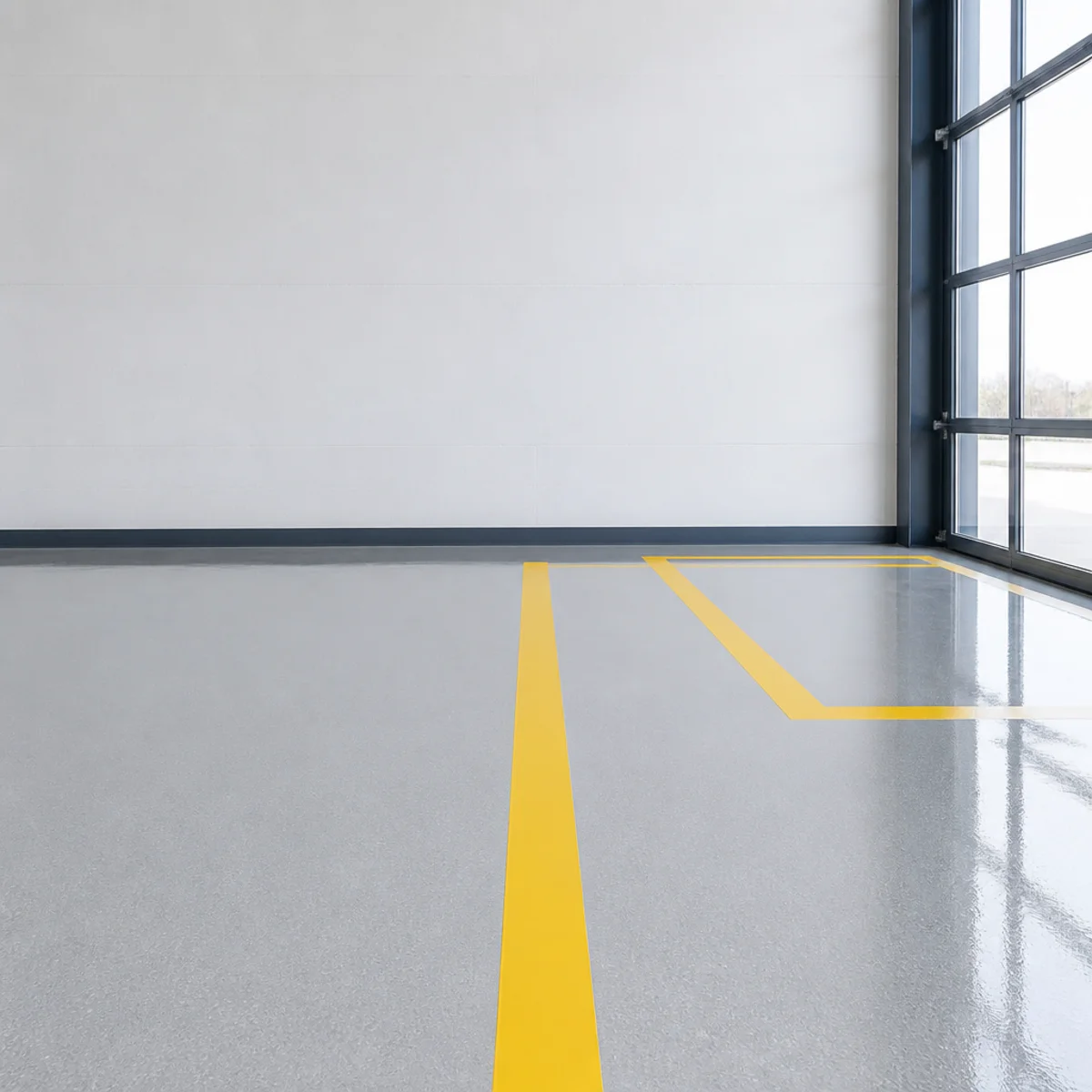
- Color-coded lanes and markings. Striping forklift routes, pedestrian paths, fire lanes, and staging zones directly into the floor reinforces traffic discipline and supports OSHA-friendly housekeeping. Painted-in markings outlast tape under forklift wheels by years.
- Light reflectivity. A clean, light-reflective floor bounces overhead lighting back into the space. Many facilities run fewer fixtures or lower wattage as a result, trimming the energy bill while making the floor safer to work on.
The Texas Climate and Big-Slab Details That Decide Everything
This is where real Gulf Coast experience separates a floor that lasts a decade from one that fails in two years. These are the steps we never skip, and the ones cut-rate installers quietly cut.
Moisture mitigation. Slab-on-grade construction means vapor is constantly pushing up through your concrete. Coat over an actively wet slab and the system will eventually blister and lift no matter how premium the product is. We test slab moisture before committing to a system, and when readings call for it we install a moisture-mitigating primer so the floor stays bonded for the long haul. Skipping this step is the number-one cause of warehouse coating failure on the Texas coast.
Surface preparation. Every durable system starts with mechanical prep, diamond grinding or shot blasting, to open the concrete profile and give the coating something to grab. This is the single biggest predictor of how long a floor lasts. Our process for concrete grinding before epoxy explains why a properly profiled slab outlasts an acid-etched or unprepped one every time, and our surface preparation work is built around it.
Joint and crack treatment. Big slabs have control joints and they move with temperature. We fill and treat joints with semi-rigid materials so forklift wheels roll across them without chipping the edges, and existing cracks and spalled areas get repaired during prep, not coated over and forgotten.
Phased installation around your operation. We plan the job zone by zone so you are never fully shut down. Using fast-cure polyaspartic where downtime is critical, we coat a section overnight or over a weekend and have it ready before the next shift. Most of our warehouse clients stay partially or fully operational through the entire project.
What Actually Drives Warehouse Floor Cost
We will not quote a per-square-foot number sight unseen, because anyone who does is guessing, and warehouse pricing swings widely with conditions. Honestly, the cost of your floor is driven by:
- Slab condition. A clean, sound slab is cheap to prep. One with old coatings, oil saturation, heavy spalling, or cracking needs more repair and grinding before anything goes down.
- Moisture levels. A slab that needs vapor mitigation adds a primer step and material cost, but it is far cheaper than recoating a failed floor.
- System and film thickness. Urethane mortar and high-build epoxy cost more than a thin coating; polished concrete pricing scales with how refined a finish you want.
- Square footage and layout. Wide-open slabs are efficient; tight, racked, obstacle-heavy spaces take longer.
- Striping, ESD, anti-slip, and other add-ons. Each spec adds material and labor.
- Downtime requirements. Off-hours and heavily phased work to keep you running costs more in labor but saves you far more in lost operations.
The cheapest floor to install is rarely the cheapest floor to own. A properly prepped, correctly specified system costs more on day one and far less over ten years, because you are not repairing, recoating, and breathing concrete dust the whole time. Spend the money once, on prep and the right system, and the floor disappears into the background and just works.
Choosing the Right System for Your Operation
Match the system to three things, traffic, chemicals, and downtime tolerance, with an eye on lifecycle cost rather than install price alone:
- Heavy forklift traffic with chemical exposure? High-build epoxy with a polyaspartic wear coat.
- Wash bays, freezers, or hot processing? Urethane mortar.
- Large storage and racking where dust control and cost matter most? Polished concrete, which also shines in commercial spaces across Texas.
- Cannot afford downtime? Fast-cure polyaspartic, installed in phases.
- Electronics, batteries, or flammables? ESD static-control coating.
- A mix of all of the above? A combination system, which is what nearly every real warehouse ends up with.
South Coast Epoxy for Warehouses and Distribution Floors
Andrew and our crew coat warehouse, shop, and distribution floors across the Gulf Coast, from Houston warehouses and industrial sites in Pasadena and Baytown, down through Galveston County facilities and our home base in League City. We are locally owned, we know exactly what Texas slabs and Texas heat do to a floor, and we plan every project around keeping you running. With 57 reviews and a 4.9 rating behind us, we would rather earn the next one than oversell you a floor you do not need.
We will walk your facility, test your slab, talk through how each zone gets used, and put together a phased, honestly-priced plan that fits your operation and your budget.
Ready for a warehouse floor that takes a beating and keeps your operation moving? Email us at info@southcoastepoxy.com or reach out through our contact page for a free, no-pressure quote and a phased project plan built around your facility.
Frequently Asked Questions
What is the best floor for a warehouse in Texas?
It depends on how the space is used. High-build epoxy is best for heavy and chemical zones, polished concrete works well for large low-dust areas under racking, and polyaspartic is the move when downtime has to be kept to a minimum.
Can warehouse epoxy handle forklift traffic?
Yes. A properly specified high-build epoxy or polyaspartic system is engineered for forklift and pallet-jack traffic. The key is correct surface prep and the right film thickness for your load.
How do you install a warehouse floor without shutting down?
We phase the work zone by zone and can use fast-cure polyaspartic systems so your operation keeps running. Many warehouses stay partially open through the entire project.
Is polished concrete good for warehouses?
Very. Polished concrete is durable, low-maintenance, low-dust and cost-effective over large square footage, which makes it ideal under racking and in main storage areas.
About South Coast Epoxy
South Coast Epoxy is a locally owned epoxy, polished concrete, and flooring contractor based in League City, TX, serving homeowners and businesses across the Houston Bay Area. Owner Andrew and his crew specialize in durable, great-looking floors built for the Texas Gulf Coast. Get a free quote →