
Flooring Service
Flake Epoxy Flooring in League City, TX
Decorative chip floors with built-in texture and a custom speckled finish.
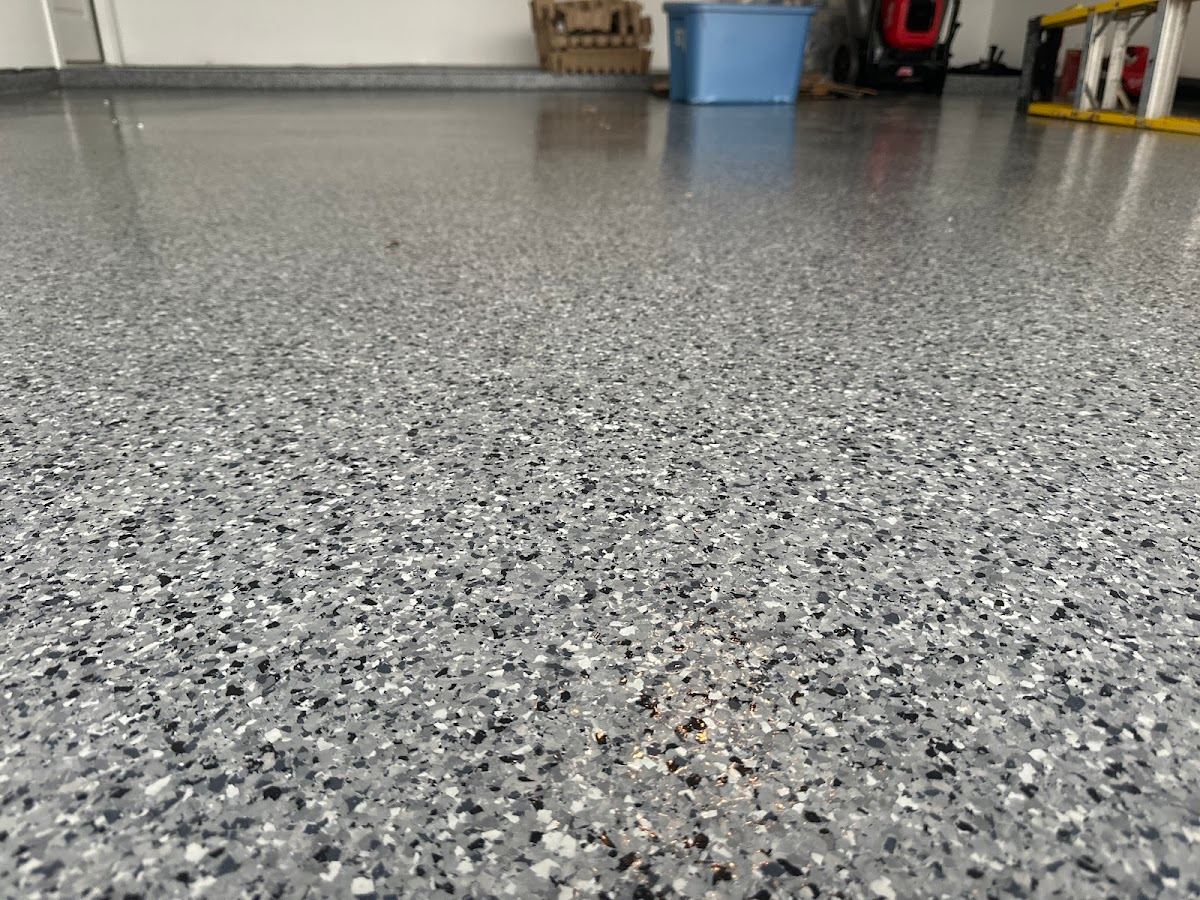
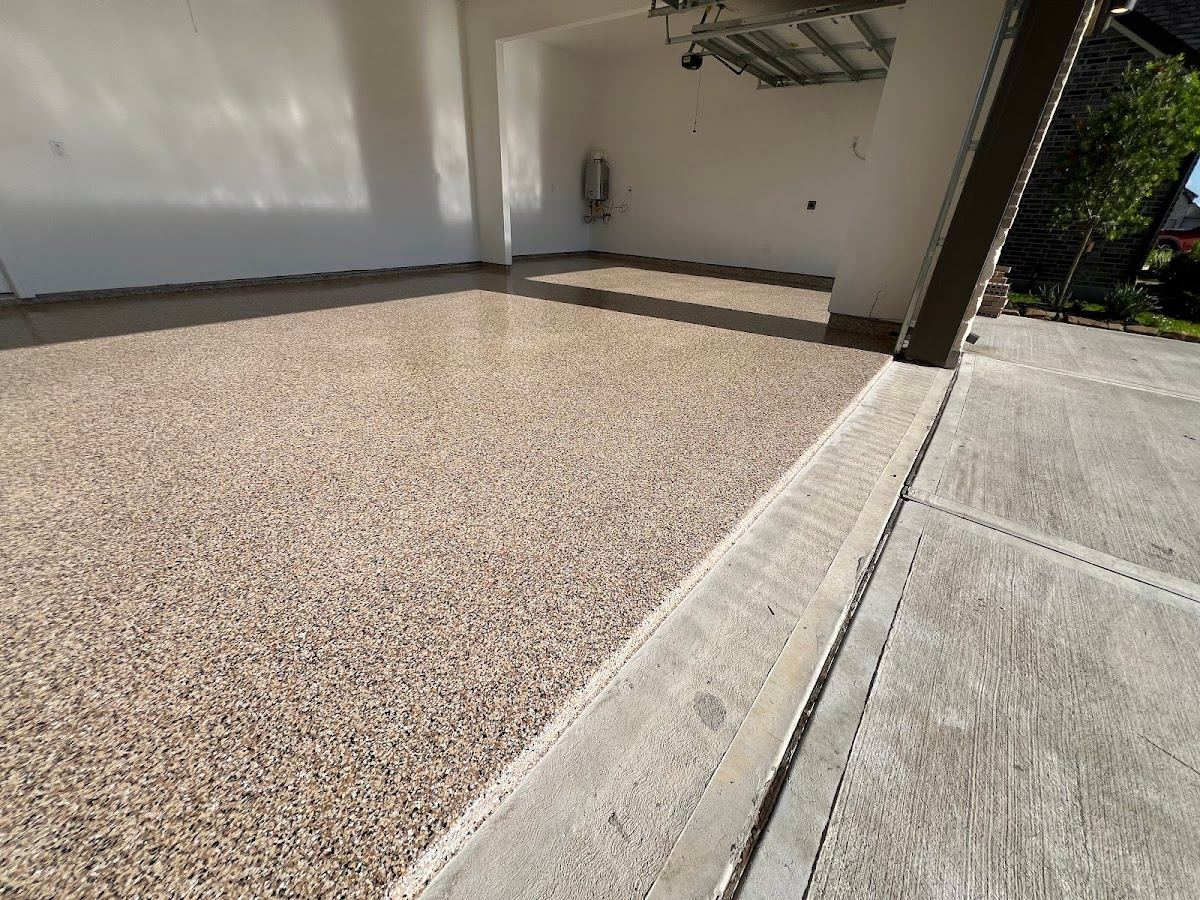
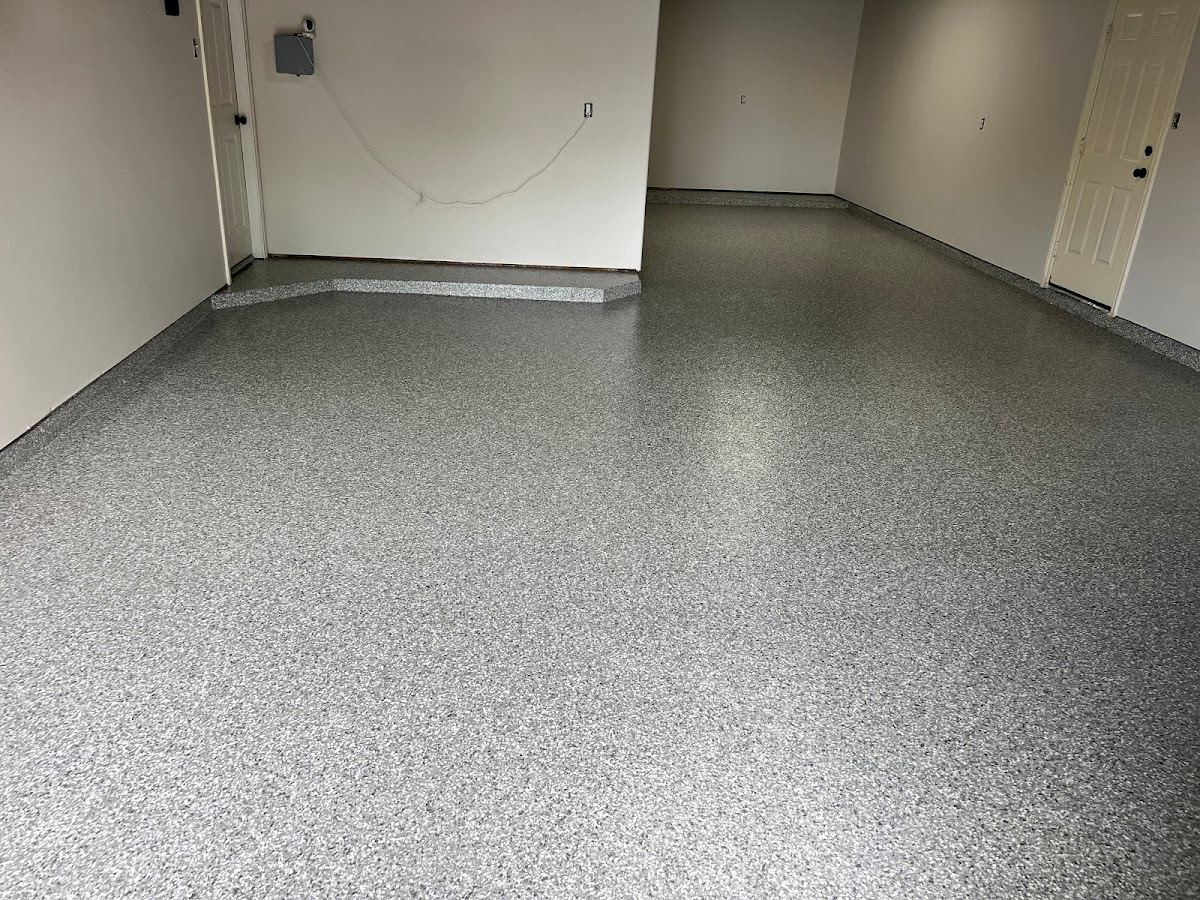
Flake (chip) epoxy is the most popular decorative system we install — durable, slip-resistant and endlessly customizable. South Coast Epoxy lays flake floors across League City, Houston and the Bay Area for garages, patios, commercial spaces and more. Andrew offers a wide range of flake blends and can send photos of finished floors in the colors you're weighing.
How it works
A flake system layers a pigmented base coat, then vinyl flakes (chips) broadcast into the wet base — usually "to refusal" for full coverage. Once cured, excess is scraped and vacuumed, the surface is lightly sanded, and one or two clear topcoats (epoxy or polyaspartic) seal it. The flakes add grip and hide minor slab imperfections, while blend choice controls the look.
Benefits
- Built-in anti-slip texture for safer footing
- Hides slab imperfections and minor repairs
- Huge range of custom flake colors and blends
- Durable, chemical- and stain-resistant when topcoated
- Easy to clean — seamless surface
- Works indoors and on covered patios
Best Used For
- Residential and shop garages
- Patios and covered outdoor areas
- Commercial kitchens and back-of-house
- Gyms, studios and locker rooms
- Pet areas, mudrooms and laundry rooms
- Retail and entry floors
Get a free flake epoxy floors quote
If you want a garage floor that shrugs off dropped tools, hot tires, and Gulf-Coast humidity while still looking sharp, flake epoxy flooring is the system most League City homeowners end up choosing. It pairs a tough resin build with decorative vinyl chips that hide slab imperfections, add real slip resistance, and let you dial in a color blend that matches your home or shop. Andrew and the South Coast Epoxy crew install flake systems the right way — with proper diamond grinding, crack repair, and moisture testing — so the floor still looks good years from now, not just on install day.
What Flake Epoxy Flooring Actually Is
Flake epoxy (also called chip epoxy or a decorative broadcast system) is a multi-layer resinous floor coating, not a single can of paint rolled onto bare concrete. The "flake" is a colored vinyl chip — a blend of pigments and particle sizes — broadcast into a wet resin base. Once the resin cures and locks the chips in place, clear topcoats seal everything into one seamless, bonded surface.
A typical full flake system is built in four functional layers:
| Layer | Purpose |
|---|---|
| Prepared slab | Diamond-ground concrete with cracks and spalls repaired |
| Pigmented base coat | Epoxy or polyaspartic that anchors the flake |
| Flake broadcast | Vinyl chips thrown "to refusal" for full coverage |
| Clear topcoat(s) | Epoxy or polyaspartic that seals, protects, and sets the sheen |
Because the flake is suspended in resin and capped by clear topcoat, you get a floor that wears as a system rather than a thin film. That is the core difference between a real flake epoxy floor and a big-box DIY kit that peels within a season.
The Benefits That Matter on a Texas Floor
The first thing people notice is the look — a speckled, terrazzo-style finish that hides dust, tire marks, and minor slab flaws far better than a solid color. But the practical wins are what keep flake popular. The chip texture creates built-in traction, so a wet garage or covered patio is safer underfoot. The seamless, non-porous surface wipes clean with a dust mop and the occasional rinse — no grout lines, no soaking-in stains. When properly topcoated, the floor resists oil, gasoline, household chemicals, road salt, and abrasion from rolling toolboxes and car tires.
Flake also forgives an imperfect slab. Older garage and patio concrete in the Houston Bay Area rarely starts out flawless, and the chip layer visually masks the patches and hairline repairs underneath. You get a uniform, finished look without paying to resurface the entire slab. For a deeper breakdown, our guide on flake epoxy floor benefits walks through where the system shines.
Built for Gulf-Coast Heat, Humidity, and Slab-on-Grade Concrete
This is where a local installer earns their keep. Most homes and shops around League City sit on slab-on-grade concrete, which means the slab is in direct contact with the ground and the moisture in it. Down here, that ground stays damp, and water vapor pushes up through the slab — a phenomenon called moisture vapor emission. If a coating gets applied over a slab that is pushing moisture, the bond fails and the floor blisters, bubbles, or delaminates. It is the single most common reason cheap epoxy jobs fail in this region.
We address it before any resin goes down. We run moisture testing on questionable slabs and, where readings call for it, recommend a moisture-mitigating primer rather than gambling on adhesion. Our surface preparation and concrete grinding steps open the concrete to the right profile so the resin grips mechanically, not just chemically.
Heat and UV matter too. Summer slab temperatures and direct sun can yellow some clear coats. For garages with open doors and covered patios, we spec UV-stable polyaspartic topcoats that resist that ambering and hold their color. And because Gulf-Coast slabs move with seasonal soil shifts, we repair cracks and control joints honestly up front instead of burying problems that will telegraph back through the finish.
Flake Options, Systems, and Finishes
Flake is one of the most customizable floors we install, and the choices fall into a few buckets.
Flake color and blend
You pick the base color and the chip blend — subtle grays and tans that read like stone, or bolder multi-color blends with a pop of accent. Andrew keeps a wide range of blends and can send photos of finished floors in the colors you are weighing, so you are choosing from real installs, not a swatch card.
Flake size and coverage
Chip size changes the texture and the look. Larger flakes broadcast at partial coverage give a flecked, open pattern; smaller chips broadcast to refusal give a denser, more uniform field with more grip. Heavier coverage also adds more slip resistance, which we tune for wet areas.
Base and topcoat resin
The base and clear coats can be epoxy, polyaspartic, or a hybrid. Polyaspartic cures fast — often allowing a faster return to use — stays flexible, and resists UV yellowing, which is why we favor it for topcoats and tight timelines. Epoxy builds a thick, economical base. We match the resin to your slab, use, and schedule rather than forcing one recipe on every job. If you want a comparison of related decorative options, see our metallic epoxy floors and quartz epoxy floors pages.
Who Flake Epoxy Is Best For
Flake is our most popular system because it fits so many spaces:
- Residential and shop garages — the classic application; durable, attractive, hides oil and tire wear. See garage floor coatings.
- Covered patios and outdoor living areas — with UV-stable topcoats, flake handles foot traffic and the occasional hose-down.
- Commercial kitchens and back-of-house — seamless and easy to sanitize where a sharper, speckled look is welcome.
- Gyms, studios, and locker rooms — traction and impact resistance for high-traffic flooring.
- Retail and entry floors — a finished, low-maintenance surface that takes daily traffic.
- Pet areas, mudrooms, and laundry rooms — wipe-clean and scratch-forgiving.
For heavier industrial loads or sterile, sanitary requirements, we will sometimes steer you toward a quartz epoxy floor or commercial epoxy flooring instead — part of giving an honest recommendation rather than the priciest upsell.
How We Install It
A flake floor is only as good as the prep underneath it, so most of our care goes into the steps before the color shows up.
- Pick a blend. You choose the flake color and base, and we review sample photos of finished floors so you know exactly what to expect.
- Diamond grind and repair. We profile the slab with diamond grinding to the right CSP (concrete surface profile), then fix cracks, spalls, and control joints. Clean, open concrete is what lets the resin lock in.
- Base coat. We apply the pigmented epoxy or polyaspartic base — and a moisture-mitigating primer first where testing calls for it.
- Broadcast flake. While the base is wet, we broadcast chips to refusal for full, even coverage.
- Scrape, sand, and topcoat. Once cured, we scrape and vacuum the excess, lightly sand the surface smooth, and apply one or two clear topcoats to seal it.
- Cure and care. We confirm your foot-traffic and drive-on return times and walk you through simple maintenance before we leave. Every job ends with a clean site and a final walkthrough.
Curious why grinding matters so much? Our post on concrete grinding before epoxy explains how prep determines whether a coating lasts.
Honest Cost Factors — What Actually Drives Price
We do not post a flat per-square-foot number because no two slabs are the same, and a quote built without seeing your floor is a guess. The real cost of a flake epoxy floor comes down to a handful of factors:
- Square footage — larger floors spread fixed costs but use more material.
- Slab and prep condition — heavily cracked, oil-stained, or previously coated slabs take more grinding and repair.
- Moisture mitigation — if testing shows vapor issues, a mitigating primer adds cost but prevents failure.
- System choice — full polyaspartic builds and heavier flake coverage cost more than a standard epoxy base with a single topcoat.
- Repairs — crack and spall repair, joint treatment, and patching all factor in.
When Andrew quotes your floor, you will understand what you are paying for and why. Fair pricing here means matching the system to what your slab actually needs — not padding the estimate.
Flake vs. the Alternatives
A solid-color epoxy gives a cleaner, uniform look but shows every scuff and slab flaw, and it offers less traction. Polished concrete is a great low-maintenance option but does not add color or hide imperfections the way flake does — our epoxy flooring vs polished concrete comparison covers that trade-off. Metallic epoxy delivers a dramatic, swirled showpiece but is smoother and better suited to showrooms than working garages. Flake sits in the sweet spot for most Texas homeowners: durable, slip-resistant, forgiving of imperfect concrete, and customizable — which is exactly why it is our most-requested decorative floor.
Maintenance and Longevity
One of flake's quiet advantages is how little it asks of you. Routine care is a dust mop and the occasional damp mop with a pH-neutral cleaner; spills wipe up before they stain. Avoid dragging sharp steel across it and use a mat under workout equipment or a motorcycle kickstand. With proper prep and a quality topcoat, a flake floor in a residential garage holds up for many years of daily use, and the topcoat can be refreshed down the road to renew the sheen rather than redoing the whole system. Our guide on how long epoxy flooring lasts and tips on maintaining an epoxy garage floor go deeper.
Why Choose South Coast Epoxy
South Coast Epoxy is locally owned and based in League City, and we install flake floors across Houston and the Bay Area — including Friendswood, Pearland, and Galveston. Our advantage is not a flashy showroom; it is knowing this region's concrete. We understand Gulf-Coast heat, humidity, and slab-on-grade moisture, we lead with proper diamond grinding and moisture testing, and we give honest recommendations with clear communication and fair pricing. You get clean prep, careful flake work, and a final walkthrough — a floor done right the first time.
Ready to see your colors? Email South Coast Epoxy at info@southcoastepoxy.com or request a free quote. Tell us about your space and slab, and Andrew will help you choose a flake blend and a system built to last on the Texas Gulf Coast.
Recent Flake Epoxy Floors Projects
Our Process
Pick a blend
Choose flake color and base; review sample photos of finished floors.
Grind & repair
Profile the slab and fix cracks and spalls.
Base coat
Apply a pigmented epoxy or polyaspartic base.
Broadcast flake
Broadcast chips to refusal across the wet base.
Scrape, sand & topcoat
Remove excess, sand smooth, and apply clear topcoat(s).
Cure & care
Confirm return-to-use times and walk you through care.
Flake Epoxy Floors FAQs
What is flake epoxy?
It's a system where decorative vinyl chips are broadcast into a base coat then sealed — giving a textured, speckled, durable floor.
Is it slip-resistant?
Yes — the flake texture adds traction, and we can boost anti-slip in the topcoat for wet areas.
Can I customize the colors?
Absolutely — there's a wide range of blends, and Andrew can show finished floors in your candidate colors.
Is flake good for patios?
Yes for covered patios; we'll use UV-stable topcoats and confirm the area is suitable.
How does it compare to solid-color epoxy?
Flake adds texture and hides imperfections better, while solid color gives a cleaner, uniform look — we'll help you decide.
Ready to Upgrade Your Floors?
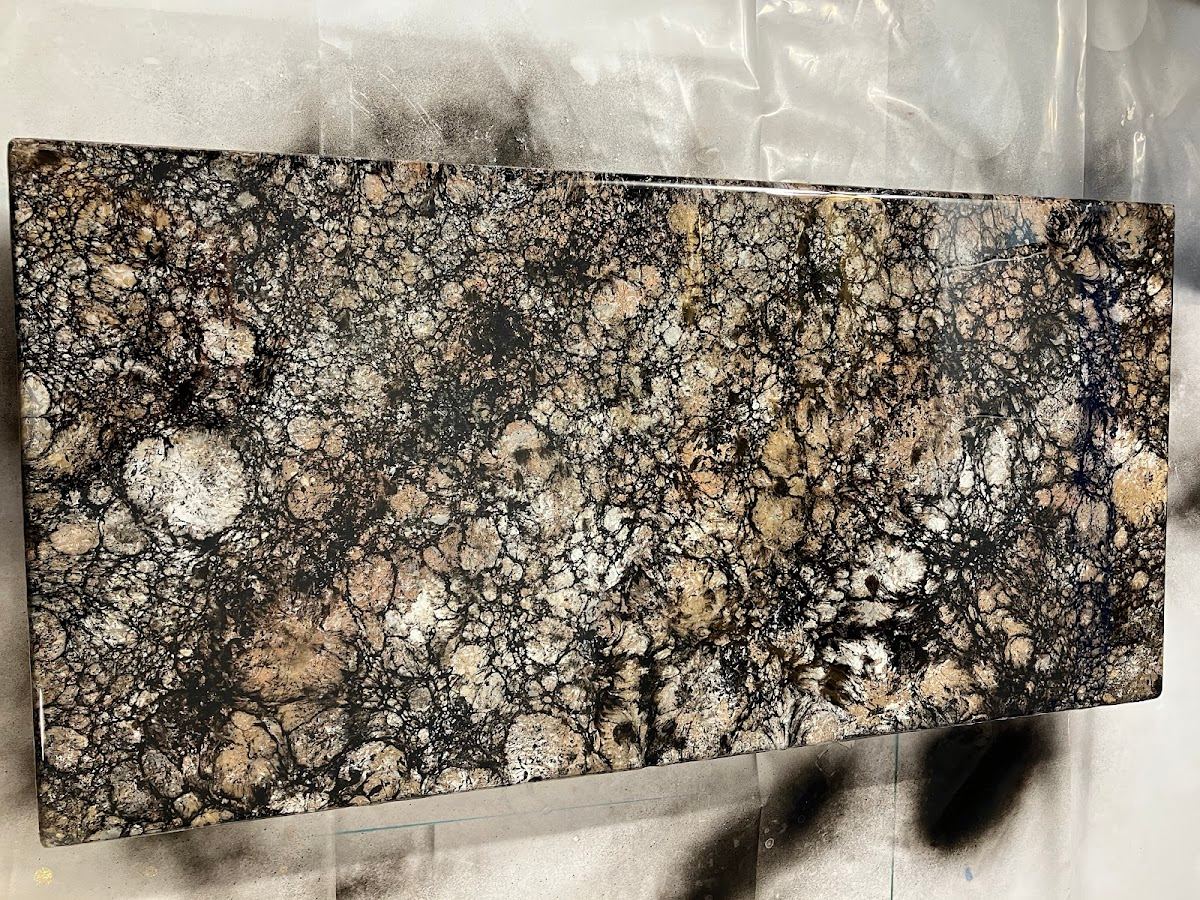
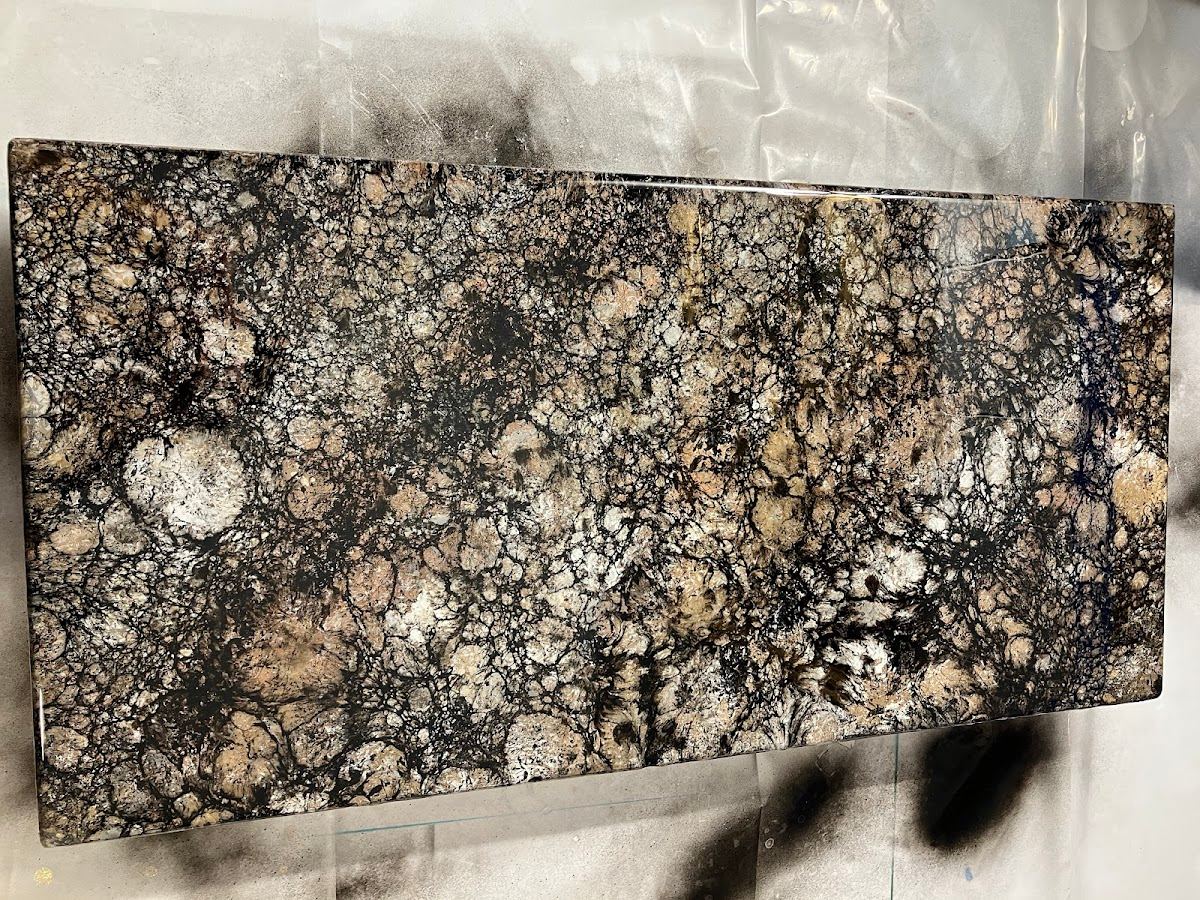
Whether you need a garage epoxy floor, polished concrete, a commercial coating system, a restaurant floor, a warehouse floor, or a custom countertop finish, South Coast Epoxy will help you choose the right surface system for your space.
Prefer email? Reach us at info@southcoastepoxy.com