
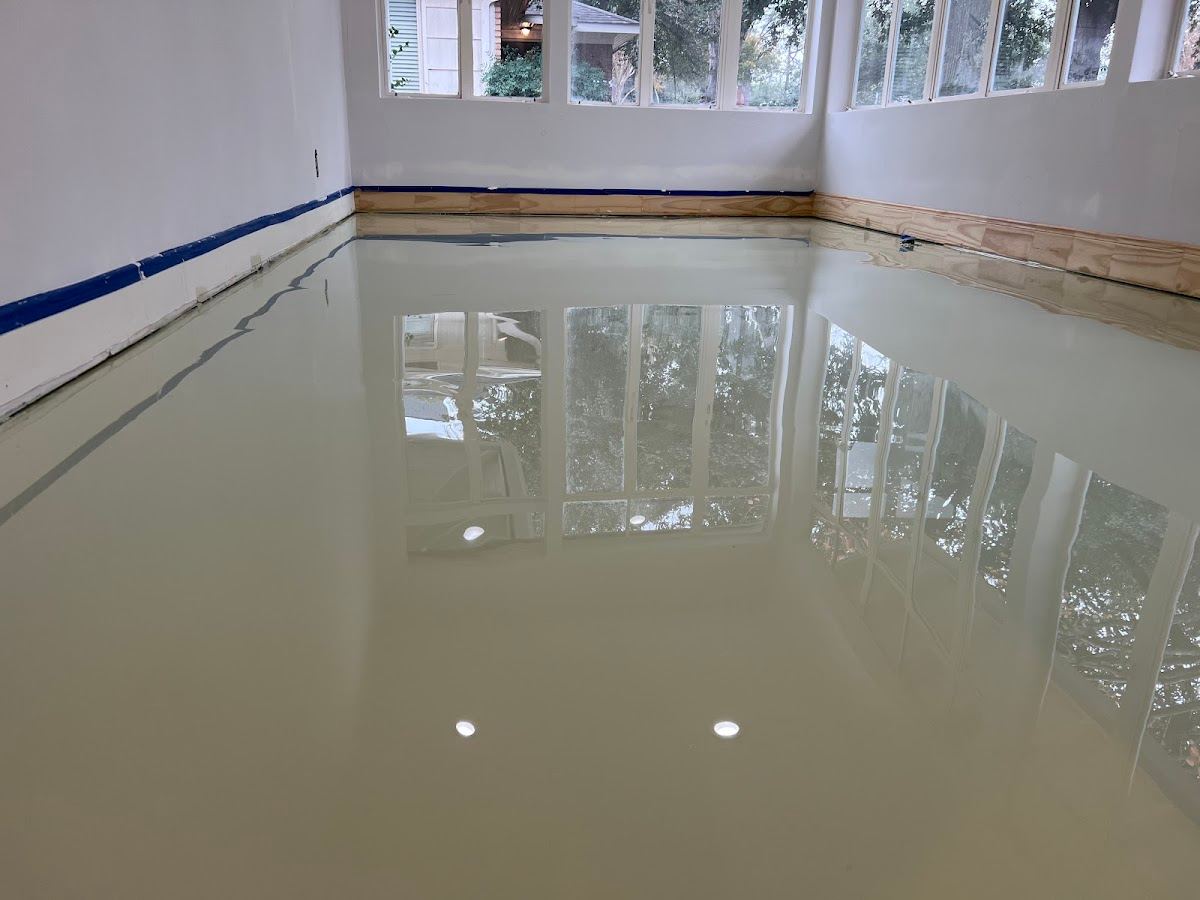
Walk through a modern retail store, a clean distribution warehouse, or a bright office lobby in Texas and there is a good chance you are standing on polished concrete without realizing the floor is the slab itself. That is exactly the appeal: a hard, low-dust, low-maintenance surface that holds up to decades of traffic with no coating on top to chip or peel. For business owners weighing polished concrete for commercial spaces in Texas, the real questions are whether your slab is a good candidate, what finish you actually want, and how our Gulf Coast climate changes the equation. Here is the honest, complete answer from Andrew and the crew at South Coast Epoxy in League City.
What polished concrete actually is (and what it is not)
Polished concrete is a mechanical refinement of an existing concrete slab, not a product you install on top of it. We grind the surface with progressively finer diamond tooling, harden it with a chemical densifier, then refine it to the sheen you choose. The finished floor is the concrete, densified and polished, which is why it cannot delaminate, blister, or peel the way a coating eventually can.
It helps to know the difference between true polished concrete and the look-alikes:
- Mechanically polished concrete runs through the full diamond grit sequence with a penetrating densifier. The shine comes from the refined slab, not a film.
- Grind and seal stops earlier and adds a topical sealer or guard for gloss. It is cheaper up front, but the sealer wears and needs recoating, so it behaves more like a thin coating.
- Burnished coatings are guard products buffed to a shine. They photograph like polished concrete but do not deliver the same density or wear life.
For a deeper side-by-side, our guide on epoxy flooring vs. polished concrete breaks down the tradeoffs by use case.
Why Texas businesses choose polished concrete
The short version: it is durable, modern, low-maintenance, and cost-effective over large square footage. Because you are improving concrete you already own, the lifecycle math is hard to beat at scale.
That matters most in commercial settings measured in tens of thousands of square feet. A few benefits stand out:
- Durability under real load. A densified, polished slab shrugs off foot traffic, rolling carts, pallet jacks, and forklift tires far better than bare or painted concrete.
- Dramatically less dusting. Untreated concrete sheds a fine powder as it wears, especially under racking and in traffic lanes. That dust lands on inventory, shelving, and HVAC filters. Densifying and polishing locks the surface down and cuts the dusting way back.
- Light reflectivity. A polished floor bounces overhead light back into the room. In a warehouse or big-box layout that can brighten the space noticeably and, in some cases, let you run fewer or lower-wattage fixtures.
- Low lifecycle cost. No waxing or stripping like VCT tile, no recoat cycle like a coated floor. Routine cleaning plus the occasional re-burnish keeps it sharp.
- Sustainability. It is about as resource-efficient as flooring gets, since you finish the slab already in place instead of manufacturing and shipping a separate product. Polished concrete frequently contributes to LEED points on commercial projects.
The polishing process, step by step
Knowing the sequence helps you judge a bid and understand where the cost lives.
- Assessment and moisture testing. We evaluate slab hardness, flatness, cracking, contamination, and moisture before recommending anything. This step is non-negotiable on the Gulf Coast (more below).
- Grinding and surface prep. We open the surface with coarse metal-bond diamonds. How aggressive this first cut is depends on the aggregate look you want. Solid surface preparation is where most of the real work happens.
- Crack and joint treatment. Cracks, spalls, and control joints get filled and treated so they read as intentional design lines, not weak spots.
- Densification. A penetrating densifier (commonly a lithium or sodium silicate) reacts with the concrete to fill microscopic pores, creating a harder, tougher surface that takes a polish and resists wear.
- Honing and polishing. We step up through finer diamond resins until the floor reaches the target sheen.
- Stain guard and final burnish. An optional penetrating guard adds stain resistance, and a final burnish brings up the clarity.
Our dedicated pages on concrete grinding and concrete polishing cover the equipment and prep side in more detail.
Choosing your finish: gloss level and aggregate exposure
Two independent decisions define how your floor looks. Owners often confuse them, so we walk through both up front.
Gloss level
Gloss is a spectrum, not a single setting. The industry generally describes four levels, from a flat, matte look to a high, mirror-like reflection:
| Gloss level | Appearance | Best for |
|---|---|---|
| Level 1 (flat/matte) | Low sheen, hides minor flaws | Warehouses, back-of-house, industrial |
| Level 2 (satin) | Soft, low-glare shine | Offices, schools, healthcare |
| Level 3 (semi-polished) | Clear reflection of nearby objects | Retail, restaurants, showrooms |
| Level 4 (high gloss) | Mirror-like, wet-looking | Flagship retail, lobbies, auto showrooms |
Higher gloss means more polishing steps, which means more labor and a higher price.
Aggregate exposure
Aggregate exposure is how much of the stone in the concrete you reveal during the first grind:
- Cream / no exposure (Class A): smooth, uniform surface, minimal stone. Cleanest, most consistent look.
- Salt and pepper (Class B): light grinding reveals fine sand. The most common and most forgiving choice for commercial floors.
- Medium and large aggregate (Class C/D): aggressive grinding exposes the bigger stones for a terrazzo-like look. Striking, but it requires more grinding, can reveal pits that need filling, and costs more.
The right combination depends on your slab, your aesthetic, and your budget. We will tell you honestly what your particular concrete is capable of before you fall in love with a finish it cannot deliver.
What drives the cost of commercial polished concrete
We do not quote dollar figures sight unseen, because the slab in front of us is the biggest variable. Honest cost guidance means understanding the levers:
- Slab condition. Cracks, spalls, old adhesives, coatings, and contamination all add prep time. A clean, sound slab polishes faster and cheaper.
- Aggregate exposure. More exposure means more aggressive grinding and more filling, which raises cost.
- Gloss level. Each additional polishing pass adds labor.
- Square footage and layout. Large open areas are efficient; tight rooms, columns, and lots of edge work slow things down.
- Decorative add-ons. Dyes, scoring, logos, and stain guards add cost.
- Site conditions. Occupied buildings, off-hours scheduling, and access constraints affect the price.
The trap to avoid is a number that looks cheap because the bid skipped real prep. Underbuilt prep is the single most common reason a polished floor disappoints later.
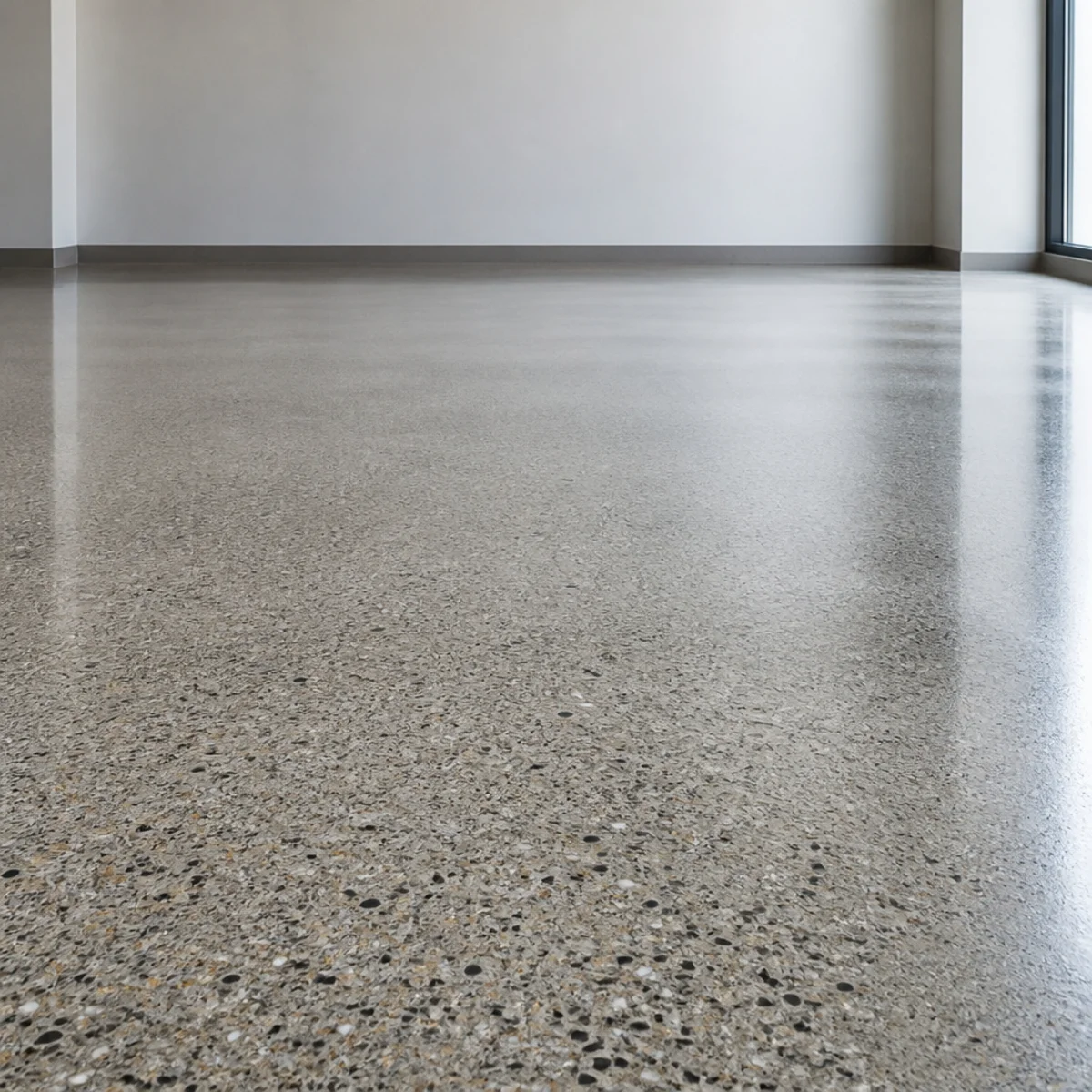
Where polished concrete shines, and where a coating wins
Polished concrete is excellent, but it is not the right answer for every room. The deciding factor is usually how you use the space and what hits the floor.
Strong fits for polished concrete:
- Retail and showrooms that want a bright, modern floor under constant foot traffic
- Offices, lobbies, and schools that want a clean look without tile or carpet upkeep
- Warehouses and distribution centers that need a tough, low-dust surface under racking, covered in our guide to commercial flooring for Texas warehouses
- Restaurant and brewery dining rooms where an industrial-modern aesthetic fits the concept (front of house, not the cook line)
Better served by a coating:
Where chemistry and washdown come into play, a sealed system wins. Automotive fluids, harsh cleaners, food acids, or constant hosing call for an epoxy or polyaspartic floor because it puts a chemical-resistant, fully sealed layer over the concrete. That is why commercial kitchens, wash bays, and process areas usually call for a commercial epoxy floor instead of a polish. Often the smartest plan is polished concrete in the public areas and a coating in the wet or chemical zones.
Texas climate, slabs, and moisture: the honest local picture
This is where local experience earns its keep. Polished concrete only works on a sound, suitable slab, and Gulf Coast conditions change what "suitable" means.
- Slab-on-grade construction. Most commercial buildings here sit directly on grade with no basement between the floor and the soil. Ground moisture can migrate up through the slab, so we have to understand that behavior before committing to a finish.
- Year-round humidity and moisture vapor. High humidity raises the stakes. Polishing is more forgiving than a coating here, because it does not seal a film over the slab the way epoxy does, but heavy moisture can still affect how a densifier reacts and how the final sheen holds. We moisture-test rather than guess.
- Expansive clay soils. A lot of Texas sits on clay that swells and shrinks with our wet-dry cycles, which can stress slabs and open cracks over time. We treat existing cracks, but we are also straight with you about a slab that is still moving.
- Existing slab quality. Older slabs may be soft, badly cracked, previously coated, or contaminated with oils and adhesives. Some of that we correct during grinding and through floor repair and maintenance; some of it means polishing is not the best path, and we will say so.
The point is simple: a good polished floor starts with an honest assessment, not a sales pitch. A slab that polishes beautifully gives you a floor for decades. A poor candidate dressed up as a good one leads to regret.
Maintaining a commercial polished concrete floor
Day-to-day care is genuinely simple, which is half the appeal:
- Daily: dust-mop to pull grit off the surface before it acts like sandpaper.
- Weekly: damp-mop with a pH-neutral cleaner. Skip acidic or harsh chemicals that can etch the surface.
- Periodically: re-burnish high-traffic lanes to restore clarity, and reapply stain guard as needed based on traffic.
There is no waxing, stripping, or recoating cycle. For high-traffic retail or food service, plan on a burnish and guard refresh every couple of years; lighter-use offices stretch much longer.
Talk to a local crew that will give you a straight answer
Andrew and the South Coast Epoxy team polish commercial floors throughout League City, Clear Lake, Houston, Galveston, and across the Bay Area. We have ground, prepped, and finished slabs in retail spaces, warehouses, restaurants, gyms, and offices, so we know what Gulf Coast concrete can and cannot do.
If your slab is a strong candidate for polished concrete, we will show you the gloss and aggregate options and what to realistically expect. If a coating would serve you better, we will tell you that instead of selling you the wrong floor. Email us at info@southcoastepoxy.com or reach out through our contact page for an honest slab assessment and a clear, no-pressure recommendation. We will tell you whether your floor is ready to shine and exactly what it will take to get there.
Frequently Asked Questions
Is polished concrete good for commercial spaces?
Yes. It is durable, low-dust, low-maintenance, and cost-effective over large areas, and it cannot peel because the finish is the slab itself rather than a coating sitting on top.
Can any concrete floor be polished?
Not always. The slab has to be sound and suitable, so we assess its condition, hardness, and moisture before we recommend polishing. Some floors are better candidates for a coating instead.
How is polished concrete maintained?
Routine dust-mopping and damp-mopping keep it clean day to day. Over time, occasional re-burnishing or resealing brings the sheen back, which keeps the floor looking sharp for years.
Should I choose polished concrete or epoxy for my business?
Polished concrete suits large, dry, low-dust areas like retail and warehouses. Epoxy is the better pick for chemical, wash-down, or heavy-impact zones. We recommend based on how you actually use the space.
About South Coast Epoxy
South Coast Epoxy is a locally owned epoxy, polished concrete, and flooring contractor based in League City, TX, serving homeowners and businesses across the Houston Bay Area. Owner Andrew and his crew specialize in durable, great-looking floors built for the Texas Gulf Coast. Get a free quote →